Most staging tip lists mix genuinely useful advice with filler. This one is ordered by impact, starting with the actions that reliably change outcomes and ending with the commonly repeated ones that mostly don't.
If you only do the first five, you'll capture most of the available effect.
The Five That Matter Most
1. Remove Roughly a Third of Everything
The single highest-return action available, and it costs nothing.
The test: if you removed a third of the objects from a room, would anyone notice something specific was gone? Usually not. But the room photographs noticeably better.
Where to start: surfaces. Then anything on the floor. Then furniture you don't need.
2. Clear Every Kitchen Counter Completely
Toaster, kettle, coffee machine, knife block, utensil holder, dish rack, fruit bowl, chopping boards. All of it.
Why: empty counters make a kitchen look larger and better equipped. Three appliances on the counter reduce apparent workspace substantially.
Add back: one bowl of fruit or a small plant. Nothing else.
3. Turn On Every Light and Open Every Curtain
Free, takes two minutes, and it changes every photograph you take.
Why it works: dark corners read as boundaries. When corners are lit, the eye reads the full extent of the room. When they're shadowed, the room appears to end at the shadow line.
Applies to viewings too. Arrive fifteen minutes early and switch everything on.
4. Pull Furniture Away From the Walls
Even 15–20cm. Wall-hugging arrangements make rooms feel like waiting areas rather than homes.
Counter-intuitively, this makes rooms look larger. Visible floor behind furniture reads as depth; furniture flush to the wall gives the eye nothing.
The exception: genuinely small rooms where clearance is already tight.
5. Remove All Personal Items
Family photographs, certificates, religious items, collections, children's artwork, personal toiletries.
Why: buyers need mental room to imagine their own life in the space. This isn't about the items being unattractive.
Try DecoAI Free
3 free credits. No credit card needed. Stage any room in 30 seconds.
Get 3 Free CreditsThe Next Tier: High Impact, Low Cost
6. Add Two Lamps to the Main Living Space
A floor lamp and a table lamp, in addition to the ceiling fixture.
Cost: $60–$150. Effect: larger than almost any other purchase at that price. Single-source ceiling lighting produces flat images with dark corners.
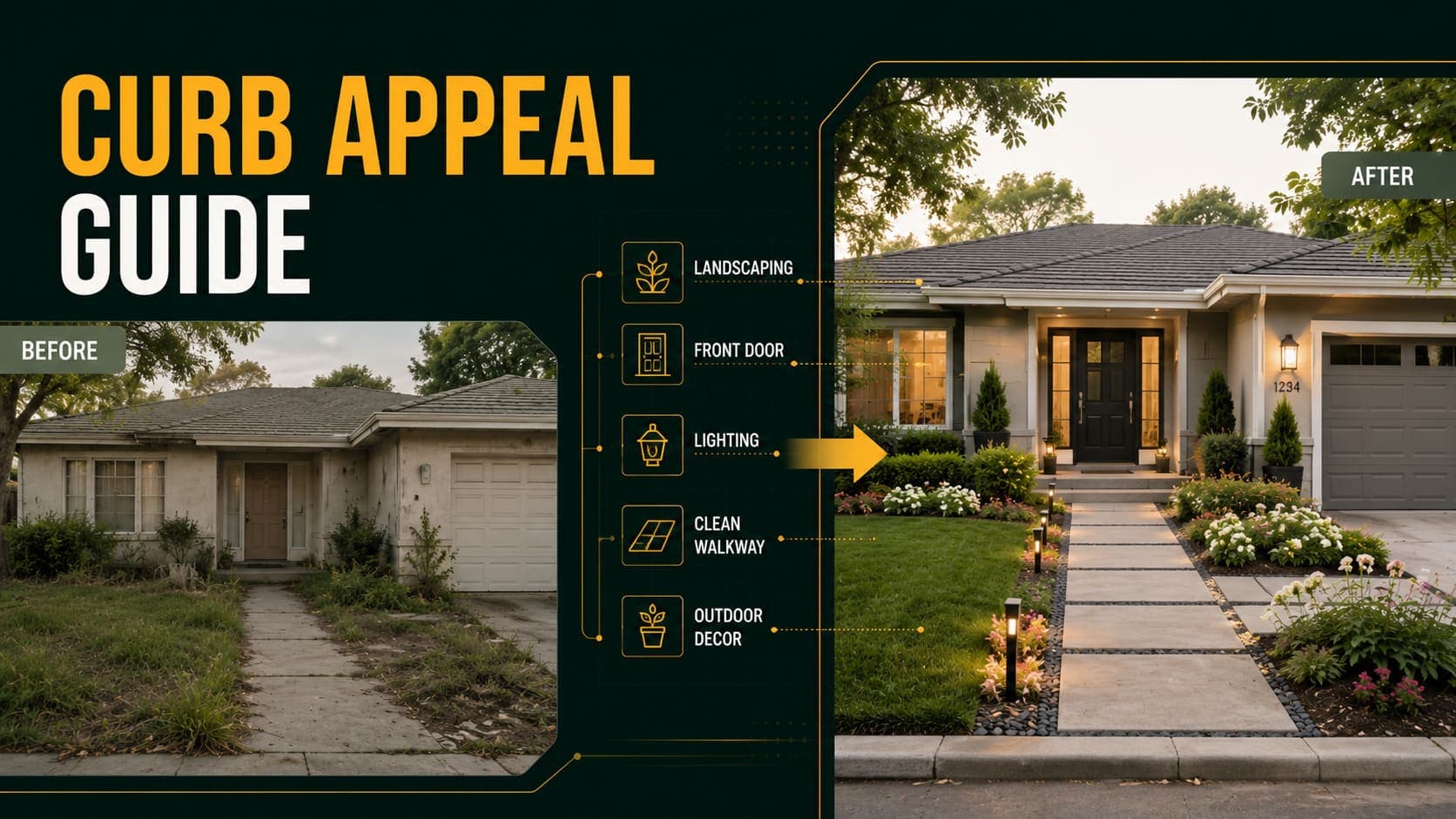
7. Clean or Repaint the Front Door
The most-looked-at element of any frontage and among the cheapest to improve.
Cost: $30–$60 in paint, an afternoon's work.
8. Deep Clean the Windows
Inside and out. Affects both the exterior appearance and the interior light.
Frequently skipped, and visible in every photograph.
9. Make Every Bed Perfectly
Wrinkles and rumpled bedding are highly visible in photographs and invisible in person.
Neutral bedding photographs better than patterned.
10. Fix the Cheap Cosmetic Things
Fill nail holes, touch up scuffed skirting, replace blown bulbs, fix dripping taps, oil squeaking doors.
Cost: under $200 and a day's work. Why it matters: in a decluttered room, small flaws become focal.
11. Match Bulb Colour Temperature
Mixing 2700K lamps with 4000K ceiling bulbs produces a visible orange-and-blue clash in photographs.
Cost: $20–$40 in bulbs. Standard: 2700K for living rooms and bedrooms, 3000K for kitchens and bathrooms.
12. Remove Bins From View
Kitchen bins, bathroom bins, and outdoor bins in the frontage. One of the most common issues in listing photographs and entirely avoidable.
13. Stage the Listing Photos
$0.50–$2 for a vacant property with AI tools, and it affects how many people click on the listing at all.
Which rooms: living room, primary bedroom, and one or two others. Four to six images.
Try DecoAI Free
3 free credits. No credit card needed. Stage any room in 30 seconds.
Get 3 Free CreditsRoom-Specific Tips Worth Doing
14. Show Storage, Don't Fill It
Built-in wardrobes and cupboards are selling points. Buyers open them.
Practical: reduce what's inside so they look spacious rather than crammed.
15. Use a Correctly Sized Rug
A rug should touch at least the front legs of the seating. A rug sitting only under the coffee table reads as a placemat and makes the arrangement look disconnected.
16. Hang Art at 145–155cm to the Centre
Most art in most homes is hung too high. It's a measurement problem and easy to fix.
Above furniture: 15–25cm gap, and roughly two-thirds the furniture width.
17. Show the Largest Bed the Room Fits
Buyers judge room size relative to the bed. A double in a room that fits a queen makes it look smaller than it is.
With clearance: 60–75cm on both sides.
18. Add Outdoor Seating
Even two chairs and a small table on a balcony or patio. It demonstrates the space is usable rather than decorative.
19. Photograph From a Corner
Standing in a corner facing diagonally captures two walls and maximum floor. Shooting from the middle of a wall produces a flat, cramped composition.
Free, and the highest-impact photography decision available.
Tips That Get Repeated and Mostly Don't Help
Worth being honest about these.
20. Baking Bread or Brewing Coffee Before Viewings
The most-repeated staging advice, and buyers have heard it too. It reads as a technique rather than an accident.
Better: air the property for twenty minutes and aim for neutral. A property that smells of nothing beats one that smells of anything.
21. Renovating to Sell
New kitchens, bathrooms, windows, and flooring rarely return their cost when done specifically for a sale. Buyers factor renovation into their offers either way.
The exception: genuinely unusable or dangerous elements.
Others That Underperform
Air fresheners and scented candles — buyers read strong scent as masking something.
Mirrors positioned to fake depth — rarely convinces in photographs and reads as manipulative.
Extensive landscaping — buyers often have their own plans. Tidy beats elaborate.
Themed styling — beach signs, word art, and heavily themed children's rooms all narrow appeal.
Full physical staging on modest properties — $2,300–$3,200 rarely justifies itself where that exceeds the entire marketing budget.
The Free Actions, Collected
If your budget is genuinely zero:
- Declutter a third
- Clear all kitchen counters
- Remove all personal items
- Turn on every light, open every curtain
- Pull furniture off the walls
- Make every bed properly
- Empty and hide bins
- Close toilet lids
- Clear the driveway of cars
- Photograph from a corner at chest height, camera level, between 10am and 2pm
Total cost: nothing. These ten capture the majority of the achievable effect.
The Under-$200 Additions
- Two lamps for the main living space — $60–$150
- Front door paint — $30–$60
- Matching bulbs throughout — $20–$40
- New doormat — $15–$30
- Cosmetic fixes: filler, paint, bulbs, washers — under $50
Total: roughly $200, and combined with the free actions, this is most of what staging can do for a typical property.
What About Physical Staging?
Cost: $2,300–$3,200 per property, recurring monthly.
Where it's justified: premium properties where buyers attend in person, open-house-driven markets, and properties with confusing layouts that need furniture to explain them.
Where it isn't: most properties. The cost frequently exceeds the entire marketing budget, and the photographic benefit can be achieved for under $2 with virtual staging.
The middle option: a reusable prop kit for viewings — a rug, plants, towels, a mirror — costing $200–$500 and used across every property you handle.
A Realistic Priority Order
If you're working through this with limited time:
Day 1: Declutter a third, remove personal items, clear kitchen counters.
Day 2: Deep clean, focusing on windows and floors.
Day 3: Cosmetic fixes, replace bulbs, add lamps.
Day 4: Rearrange furniture, front door, exterior tidy.
Day 5: Photograph everything between 10am and 2pm, then stage the key images.
Five days, roughly $200, and you've done nearly everything that meaningfully affects the outcome.
Frequently Asked Questions
What's the most effective home staging tip?
Decluttering. Removing roughly a third of what's in each room costs nothing and does more than any purchase.
What should I do if I have no budget?
The ten free actions: declutter, clear counters, remove personal items, all lights on, curtains open, furniture off the walls, beds made, bins hidden, driveway clear, and photograph from a corner in midday light.
Does baking bread before a viewing work?
It's the most-repeated advice in property and buyers recognize it. Air the property instead — neutral beats pleasant.
Should I renovate before selling?
Generally no. Kitchens, bathrooms, windows, and flooring rarely return their cost when done specifically to sell.
How much should I spend on staging?
Under $200 covers nearly everything with meaningful effect for a typical property. Virtual staging photos add $0.50–$2. Physical staging at $2,300–$3,200 is justified only in specific cases.
What's the most common staging mistake?
Leaving too much in the room. Sellers consistently underestimate how much needs to go.
Do I need to stage every room?
No. The living room, primary bedroom, kitchen, and outdoor space carry the listing. Others need cleaning rather than staging.
Should I use air freshener?
No. Buyers read strong scent as masking something. Air the property for twenty minutes instead.
How long does staging a property take?
Roughly five days part-time for the actions that matter — a day decluttering, a day cleaning, a day on fixes, a day arranging, a day photographing.
Summary
The five that matter most: declutter a third, clear kitchen counters, all lights on and curtains open, pull furniture off the walls, remove personal items. All free.
The next tier under $200: two lamps, front door paint, matching bulbs, cosmetic fixes, new doormat.
Worth $2: staged listing photos, which affect how many people click on the listing at all.
What to skip: baking bread, air fresheners, renovating to sell, extensive landscaping, and full physical staging on modest properties.
The realistic timeline: five days part-time and roughly $200 covers nearly everything with a meaningful effect.
Stage the photos once everything else is done. DecoAI gives 3 free credits with no card required — it's the last step, and it works best on rooms you've already prepared properly.