Flooring is the largest continuous surface in any room, the most expensive element to change, and the one that sets the tone for every other material decision. Getting it wrong is costly in a way getting the paint colour wrong isn't.
This covers the main options, what each costs, where each works, and what actually matters when choosing.
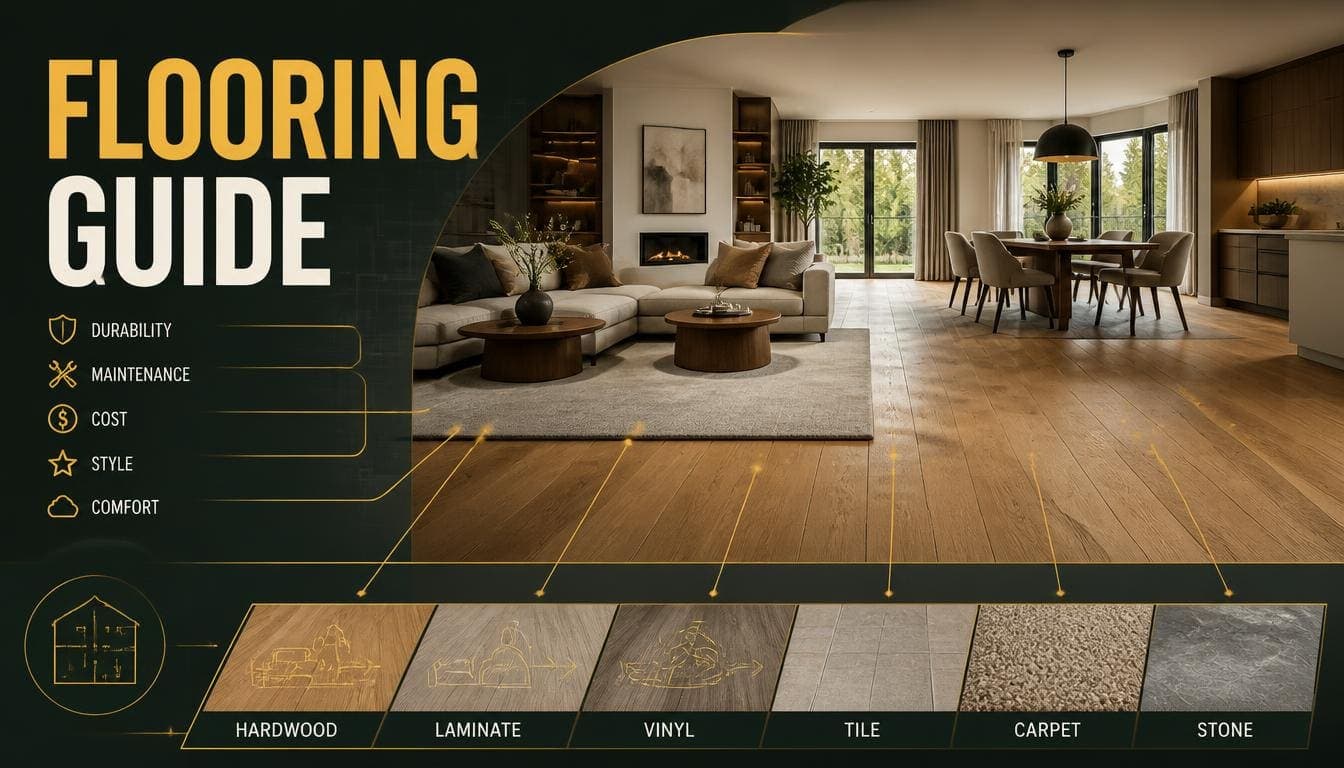
The Options Compared
| Material | Cost per m² (supply) | Lifespan | Best for |
|---|---|---|---|
| Solid timber | $50–$150 | 50+ years | Living, bedrooms, period properties |
| Engineered timber | $35–$100 | 20–40 years | Living, bedrooms, underfloor heating |
| Laminate | $12–$35 | 10–20 years | Budget-conscious, low-traffic |
| LVT / vinyl plank | $20–$60 | 15–25 years | Kitchens, bathrooms, high-traffic |
| Sheet vinyl | $10–$30 | 10–20 years | Utility, budget bathrooms |
| Porcelain tile | $20–$70 | 50+ years | Kitchens, bathrooms, entrances |
| Natural stone | $50–$200 | 50+ years | Premium kitchens, bathrooms |
| Carpet | $15–$60 | 8–15 years | Bedrooms, stairs |
| Polished concrete | $60–$120 | 50+ years | Industrial, contemporary, ground floor |
Installation adds substantially, typically $15–$60 per m² depending on material and subfloor preparation.
Regional variation is significant. Treat these as relative comparisons rather than quotations.
Try DecoAI Free
3 free credits. No credit card needed. Stage any room in 30 seconds.
Get 3 Free CreditsTimber
Solid Timber
Planks of actual wood throughout their thickness.
Advantages: can be sanded and refinished multiple times, lasts decades, ages well, adds perceived value.
Disadvantages: expensive, moves with humidity, unsuitable over underfloor heating in most cases, unsuitable for bathrooms and often kitchens.
Best for: living rooms, bedrooms, hallways, and period properties where it matches the architecture.
Engineered Timber
A real wood top layer bonded to plywood or HDF layers beneath.
Advantages: looks identical to solid timber, more stable with humidity changes, works over underfloor heating, cheaper than solid.
Disadvantages: can only be refinished once or twice depending on the wear layer thickness, and cheap versions have very thin wear layers.
What to check: the wear layer thickness. Under 2mm can't be refinished meaningfully. 4mm+ allows two or three refinishes.
Best for: most situations where you want timber. It's the practical default.
Timber Tone and Width
Pale oak and ash — makes rooms look larger, currently dominant, suits Scandinavian and Contemporary.
Mid oak — the safest default. Warm without being dark.
Walnut and dark tones — suits Traditional, Mid-century, and Luxury. Makes rooms feel smaller.
Plank width: wider planks (180mm+) read as more current and make rooms look larger. Narrow strip flooring reads as more traditional.
Direction: run boards along the room's longest dimension. It emphasizes the length and is the standard convention.
LVT and Vinyl
Luxury Vinyl Tile
Multi-layer vinyl with a printed design layer and a wear layer, in plank or tile format.
Advantages: genuinely waterproof, warm underfoot, quiet, durable, and the good versions look convincing.
Disadvantages: it isn't timber, and close inspection shows it. Cheap versions have obvious repeating patterns.
What to check: wear layer thickness — 0.3mm for residential, 0.5mm+ for heavy use. And pattern repeat — cheaper products repeat every few planks, which is visible across a large floor.
Best for: kitchens, bathrooms, utility rooms, and anywhere water is a concern. Also whole-house use in rentals and family homes where practicality wins.
Sheet Vinyl
Continuous roll rather than planks.
Advantages: cheapest option, fully seamless so genuinely waterproof, easy to clean.
Disadvantages: reads as budget, difficult to make look good in large areas.
Best for: utility rooms, budget bathrooms, and rental properties.
Laminate
A photographic layer over HDF core with a wear layer on top.
Advantages: cheap, easy to install, scratch-resistant.
Disadvantages: not waterproof — water damages the core permanently. Sounds hollow underfoot. Cheap versions look obviously artificial.
The current position: LVT has largely superseded laminate for most applications. It costs somewhat more and performs substantially better.
Best for: genuinely budget-constrained projects in dry areas.
Try DecoAI Free
3 free credits. No credit card needed. Stage any room in 30 seconds.
Get 3 Free CreditsTile and Stone
Porcelain Tile
Dense, hard-wearing, low-porosity ceramic.
Advantages: extremely durable, fully waterproof, works with underfloor heating, huge range including convincing timber and stone effects.
Disadvantages: cold and hard underfoot without underfloor heating, unforgiving of dropped items, grout lines need cleaning.
Best for: kitchens, bathrooms, entrances, and anywhere with heavy traffic or water.
Large format — tiles 600mm+ reduce grout lines substantially and make rooms look larger. Requires a very level subfloor.
Natural Stone
Marble, limestone, travertine, slate.
Advantages: genuinely unique, ages well, reads as premium.
Disadvantages: expensive, most require sealing, marble and limestone stain and etch, cold underfoot.
Best for: premium bathrooms and kitchens where the budget supports it and the maintenance is acceptable.
The practical caution: marble in a family kitchen will stain and etch. It's a maintenance choice as much as an aesthetic one.
Carpet
Frequently dismissed and still the right answer in specific places.
Advantages: warm, quiet, soft underfoot, cheapest to install, safest on stairs.
Disadvantages: stains, wears visibly, harder to clean, dates faster than hard flooring, and buyers often plan to replace it.
Best for: bedrooms and stairs. Both benefit from the warmth and acoustic softness.
Where it's fallen out of favour: living rooms, hallways, and dining areas, where hard flooring has become the expectation.
For selling: worn carpet is a visible negative. Clean carpet in a neutral tone is fine. Replacing it specifically to sell rarely returns the cost.
Polished Concrete
Advantages: extremely durable, works excellently with underfloor heating, seamless, distinctive.
Disadvantages: expensive to do well, cold and hard without heating, can crack, difficult to change later.
Best for: contemporary and industrial properties, ground floors, and open plan spaces where continuity matters.
Choosing by Room
Living Room
Best: engineered timber, solid timber, or high-quality LVT.
Why: warmth, appearance, and it's the room where flooring is most visible.
Avoid: anything obviously budget, since this room carries the property's impression.
Kitchen
Best: LVT, porcelain tile, or engineered timber with a good finish.
Why: water, dropped items, and heavy traffic.
The timber question: engineered timber in a kitchen works if you're realistic about spills. Solid timber doesn't.
Bathroom
Best: porcelain tile, LVT, or natural stone.
Why: standing water is inevitable.
Never: laminate, solid timber, or carpet.
Bedroom
Best: carpet or engineered timber.
Why: warmth underfoot matters more here than anywhere.
Practical: timber with a rug beside the bed achieves both.
Hallway and Entrance
Best: porcelain tile, LVT, or hardwearing engineered timber.
Why: heaviest traffic, wet shoes, and it's the first surface anyone sees.
Utility Room
Best: LVT, sheet vinyl, or tile.
Why: water and appliance vibration.
Continuity vs Zoning
The Case for Continuous Flooring
Running one material through connected spaces makes the area look larger. Threshold strips create visual boundaries that make the eye read two smaller rooms rather than one large one.
Best for: smaller properties, open plan areas, and anywhere you want maximum perceived space.
The Case for Changing Materials
Different rooms have genuinely different requirements. Tile in a bathroom and timber in a bedroom is a practical decision, not a compromise.
In open plan spaces: a material change between kitchen and living can define zones effectively.
The Practical Resolution
Continuous through connected living areas — hallway, living, dining, and often kitchen.
Different materials in wet areas — bathrooms, utility.
Flush transitions where materials meet, rather than raised threshold strips.
What Affects Perceived Room Size
Colour
Pale floors reflect light and read as more open.
Dark floors absorb light and ground the room. Better in large spaces than small ones.
Plank Direction
Running boards along the room's longest dimension emphasizes the length. Running across a room emphasizes width, which is occasionally what you want in a narrow space.
Plank Width
Wider planks read as more current and produce fewer visual lines, which makes floors look larger.
Continuity
Fewer transitions means larger perceived space. This is the strongest of the four factors.
Grout Lines
In tiled areas, fewer and closer-matched grout lines read as more continuous. Large format tile with matching grout is the most seamless tile option.
For Property Presentation
What Buyers Notice
Condition first. Worn, scratched, stained, or dated flooring is registered immediately and factored into offers.
Material second. Timber and quality LVT read positively. Worn carpet in living areas reads negatively.
Continuity third. Multiple different floors across connected spaces reads as piecemeal.
Should You Replace Flooring Before Selling?
Usually not. Buyers factor flooring into their offer, typically at close to replacement cost. Replacing it yourself rarely returns more than it costs.
The exceptions:
- Flooring that's genuinely damaged or hazardous
- Carpet with visible stains or odour, where cleaning won't fix it
- A single room with flooring wildly inconsistent with the rest
The cheaper alternative: professional cleaning. Carpet cleaning at $100–$250 or timber floor buffing can transform how flooring reads for a fraction of replacement cost.
For Photography
Clean floors thoroughly. Dust, footprints, and scuffs are more visible in photographs than in person.
Remove rugs and mats in kitchens and hallways. They break up the floor and make rooms look smaller.
Position furniture to show floor. Visible floor area is the strongest signal of room size.
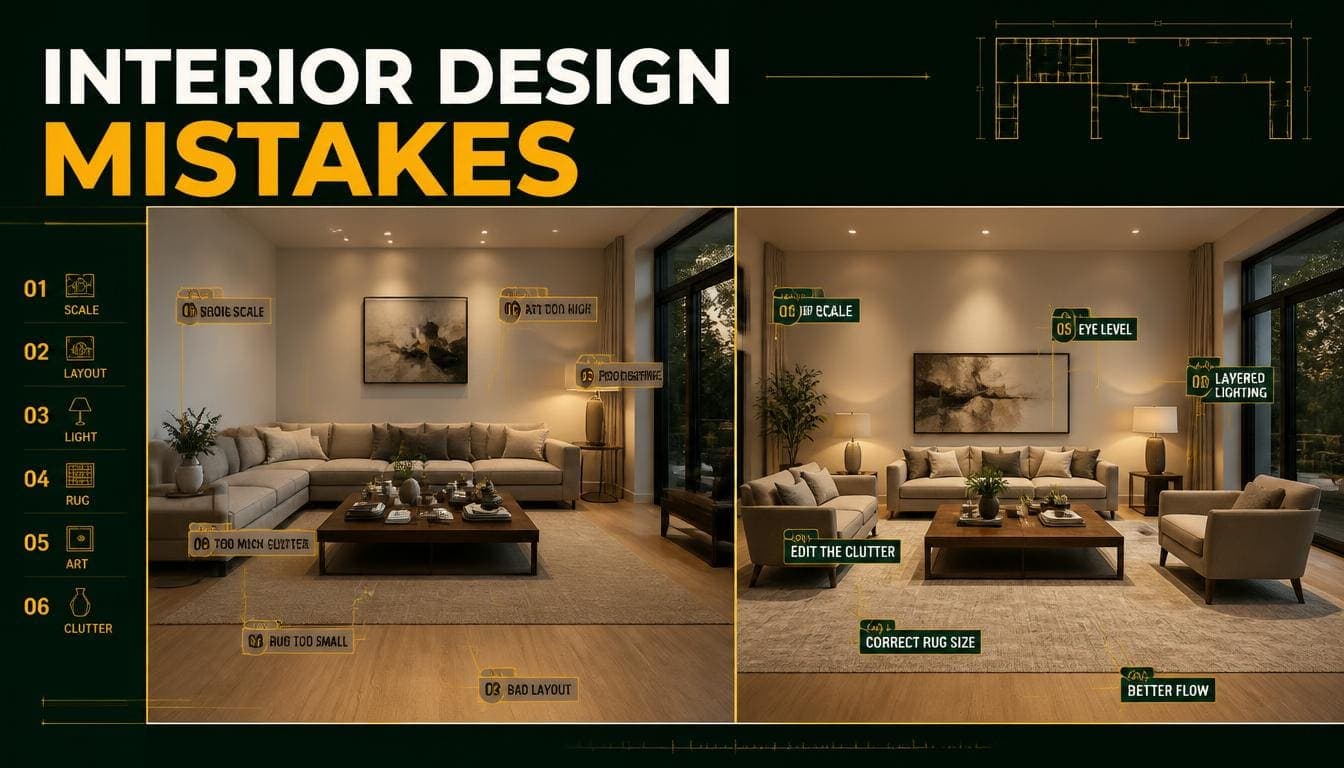
Common Flooring Mistakes
1. Timber or Laminate in Bathrooms
Water damages both. Tile or LVT.
2. Cheap Laminate in Visible Areas
Reads as budget immediately and dates quickly.
3. Too Many Different Materials
Three or four different floors across a small property reads as piecemeal.
4. Running Planks the Wrong Way
Along the longest dimension is the convention and usually looks better.
5. Dark Floors in Small Dark Rooms
Absorbs the limited light and makes the space feel smaller.
6. Replacing Flooring Specifically to Sell
Rarely returns its cost. Cleaning usually delivers most of the benefit.
7. Ignoring Underfloor Heating Compatibility
Solid timber and thick carpet both perform poorly over underfloor heating. Engineered timber, LVT, and tile are the compatible options.
8. Skimping on Underlay
Underlay affects how flooring feels, sounds, and lasts. It's a small proportion of the total cost and it matters.
Frequently Asked Questions
What's the best flooring for a whole house?
Engineered timber or good LVT for living areas and bedrooms, with tile or LVT in bathrooms and utility rooms. That combination covers most properties.
What's the difference between engineered wood and laminate?
Engineered wood has a real timber top layer. Laminate has a photographic image under a wear layer. Engineered looks and ages like real wood; laminate doesn't.
Is LVT better than laminate?
Generally yes. LVT is waterproof, quieter, warmer underfoot, and the good versions look more convincing. It costs somewhat more.
What flooring works with underfloor heating?
Engineered timber, LVT, and tile. Solid timber and thick carpet both perform poorly.
Should I use the same flooring throughout?
Continuous flooring through connected living areas makes them look larger. Wet areas need different materials regardless.
Does dark or light flooring make rooms look bigger?
Pale flooring reflects light and reads as more open. Dark flooring grounds the room and works better in large spaces.
Which way should floorboards run?
Along the room's longest dimension. It emphasizes the length and is the standard convention.
Should I replace flooring before selling?
Usually not — buyers factor it into their offer at close to replacement cost. Professional cleaning delivers most of the benefit for a fraction of the price.
Is carpet outdated?
In living rooms and hallways, largely. In bedrooms and on stairs it remains the practical choice for warmth and acoustics.
Summary
The practical default: engineered timber for living areas and bedrooms, LVT or tile for kitchens, bathrooms and utility, carpet on stairs and optionally in bedrooms.
Cost range: $10–$200 per m² supply, plus $15–$60 installation.
What affects perceived size: continuity most, then colour, plank width, and direction.
Never use: timber or laminate in bathrooms, laminate anywhere water reaches.
Before selling: clean rather than replace. Buyers factor flooring into offers at close to replacement cost.
Show the floor in staged images. DecoAI gives 3 free credits with no card required — visible floor area is the strongest signal of room size, and staging that hides it works against you.