Scandinavian design is the most reliably useful style in property staging, and the reason is practical rather than aesthetic: it makes rooms look larger and brighter than almost any alternative.
Light walls, pale wood, slim furniture, and restrained decoration combine to maximize perceived space. In a compact apartment or a room with limited natural light, that matters more than any other design consideration.
This guide covers what actually defines the style, how it differs from Minimalist and Modern, and where it works best.
What Scandinavian Design Is
The style emerged in Denmark, Sweden, Norway, and Finland during the 1950s, shaped by a specific set of constraints: long dark winters, limited living space, and a cultural preference for functional simplicity over display.
Those constraints produced a style optimized for making small, dim spaces feel open and warm.
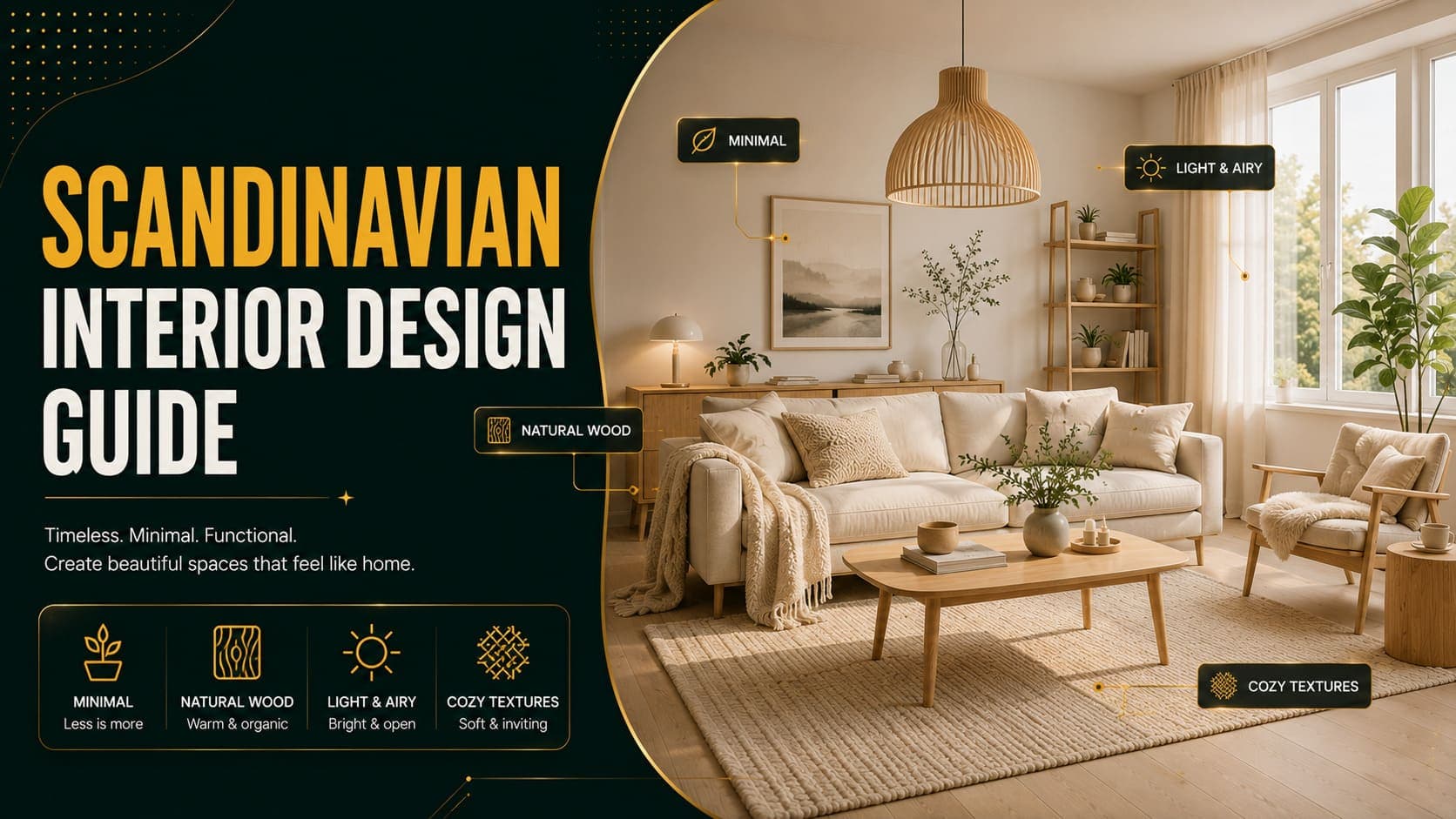
Core Characteristics
Light-reflecting surfaces — White or very pale walls, pale wood floors. In a country with four hours of winter daylight, every surface works to bounce available light.
Pale wood — Birch, ash, light oak, pine. Warmer than white, lighter than the walnut and teak of Mid-Century Modern.
Slim, functional furniture — Clean lines, visible legs, no bulk. Every piece earns its place.
Natural textiles — Wool, linen, cotton, sheepskin. Texture provides warmth where colour doesn't.
Restrained colour — Predominantly neutral, with soft muted accents rather than saturated ones.
Negative space — Deliberate emptiness. Uncluttered surfaces and visible floor are part of the design, not an absence of it.
Natural light celebrated — Windows left unobstructed, minimal or sheer window coverings.
Try DecoAI Free
3 free credits. No credit card needed. Stage any room in 30 seconds.
Get 3 Free CreditsThe Scandinavian Palette
Base Colours
- White — the dominant wall colour, often with a warm rather than cool undertone
- Pale wood — birch, ash, light oak
- Soft grey — used for larger upholstered pieces
- Off-white and cream — for textiles
Accent Colours
Scandinavian accents are muted and drawn from nature:
- Sage green
- Dusty blue
- Soft terracotta
- Muted mustard
- Pale pink
These appear in cushions, throws, and small ceramics rather than in large surfaces.
What It Avoids
- Saturated or bright colours
- Dark walls
- Heavy patterns
- High-gloss finishes
- Metallic accents beyond simple black or brass hardware
Hygge and the Warmth Factor
The Danish concept of hygge — roughly, cosy contentment — is inseparable from Scandinavian interiors.
Practically, hygge translates into design decisions:
Layered textiles — A wool throw over a linen sofa, a sheepskin on a wooden chair. Texture creates warmth without adding visual weight.
Candles and warm lighting — Multiple light sources at low level rather than a single overhead fixture.
Natural materials — Wood, wool, linen, ceramic. Nothing synthetic-looking.
Plants — One or two, usually simple green foliage rather than flowering.
This is what separates Scandinavian from Minimalist. Both are restrained, but Scandinavian is deliberately warm.
Scandinavian vs Minimalist vs Modern
These three get confused because they share a preference for restraint.
| Factor | Scandinavian | Minimalist | Modern |
|---|---|---|---|
| Palette | Warm whites, pale wood | Stark white, black | White, grey, natural wood |
| Warmth | High — textiles, wood | Low — deliberate austerity | Medium |
| Furniture count | Moderate | Absolute minimum | Moderate |
| Texture | Central to the style | Minimal | Present but secondary |
| Accent colours | Soft, muted | Usually none | One bold accent |
| Feeling | Cosy, calm | Austere, precise | Clean, considered |
The distinction that matters: Minimalist removes things. Scandinavian keeps the things that create warmth and removes the rest.
Scandinavian by Room
Living Room
Furniture: Slim sofa in grey or oatmeal linen, one or two light wood chairs, small round coffee table Palette: White walls, pale wood floor Textiles: Wool throw, two or three cushions in muted tones, a natural-fibre rug Lighting: Floor lamp plus a table lamp — warm bulbs, not cool Plants: One large-leaf plant
Bedroom
Furniture: Low wooden bed frame, matching bedside tables in pale wood Palette: White walls, white or oatmeal linen bedding Textiles: Layered bedding, a wool throw at the foot, sheepskin beside the bed Lighting: Two bedside lamps with warm bulbs Avoid: Heavy headboards, dark wood, patterned bedding
This is the strongest Scandinavian application. Bedrooms benefit most from the style's calm.
Kitchen
Cabinets: White or pale wood, flat-front, simple black or brass handles Worktops: Light wood or pale stone Open shelving: Characteristic of the style — a few ceramics and wooden boards on display Lighting: Simple pendants over an island or table
Dining Area
Furniture: Light wood table, simple wooden chairs — often mismatched, which is characteristic Palette: Wood and white Lighting: A single statement pendant, low over the table Table: A small ceramic vase with greenery, nothing more
Home Office
Furniture: Pale wood desk, simple chair, open shelving Palette: White and light wood Lighting: Task lamp with a simple arm Plant: One small plant on the desk or shelf
Try DecoAI Free
3 free credits. No credit card needed. Stage any room in 30 seconds.
Get 3 Free CreditsWhy Scandinavian Dominates Property Staging
It Makes Rooms Look Larger
The combination of pale walls, light wood, slim furniture on visible legs, and deliberate negative space maximizes visible floor and reflected light. For compact properties, this is the single most useful characteristic available.
It Photographs Exceptionally Well
Light palettes handle a wide range of exposure conditions. A Scandinavian room photographs cleanly in bright light and still reads well in more limited light — where darker styles become muddy.
It Has Broad Demographic Appeal
Scandinavian doesn't signal a specific age group, income bracket, or cultural background. It reads as calm and current to most viewers.
It Works in Bright and Dim Rooms
The style was developed for dim northern light. In a room with limited natural light, Scandinavian's reflective surfaces work harder than any alternative.
It's Warm Enough for Family Markets
Unlike Modern or Minimalist, Scandinavian's textiles and wood tones don't read as cold. This makes it viable in family-oriented markets where colder styles underperform.
Where Scandinavian Falls Short
Very Large Rooms
The style's restraint can leave generously sized rooms feeling underfurnished. A 40 m² living space staged Scandinavian sometimes reads as sparse rather than spacious.
Premium and Luxury Properties
Scandinavian signals calm practicality, not opulence. On a property where buyers expect a certain presentation standard, it can undersell.
Properties with Strong Existing Character
A converted warehouse with exposed brick and steel beams fights Scandinavian's softness. Industrial or Contemporary usually suits better.
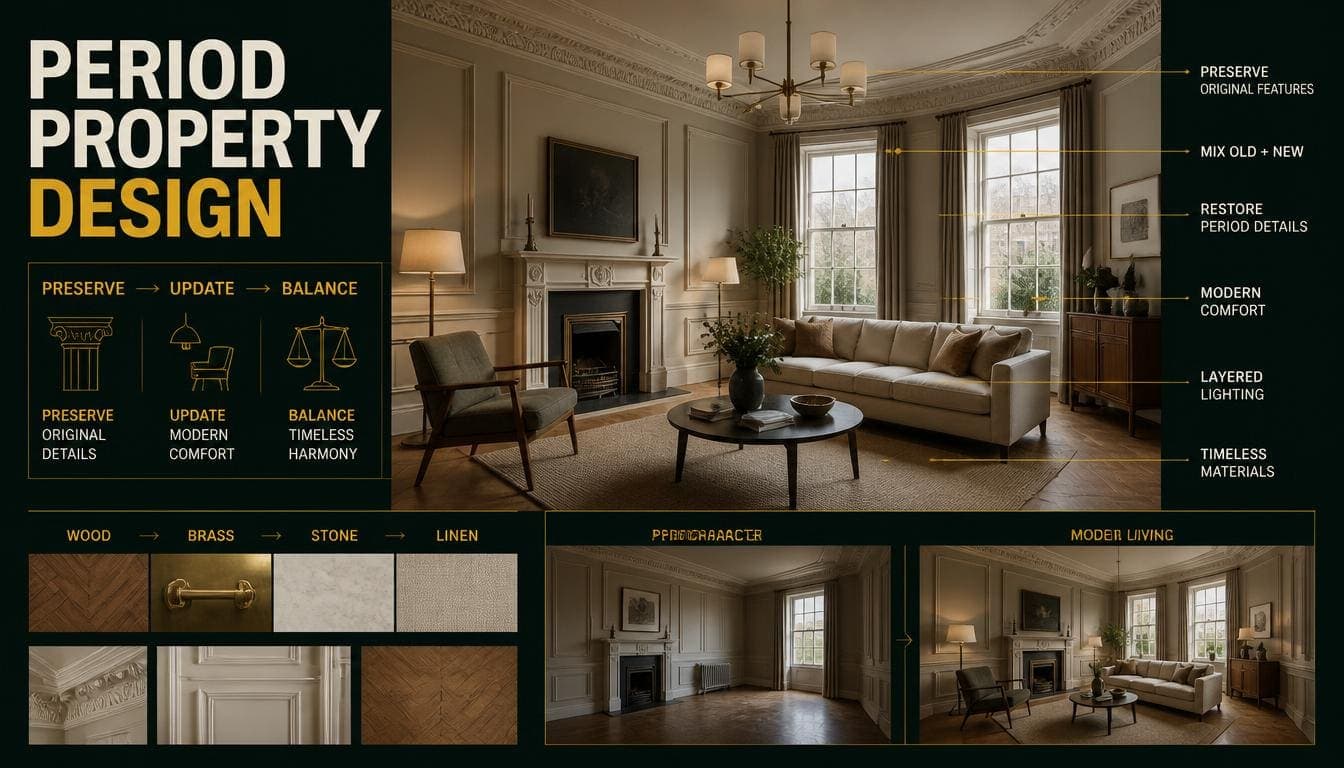
Period Properties
Ornate cornicing, panelling, and marble fireplaces sit awkwardly against Scandinavian's simplicity. Traditional or Contemporary works better.
Common Scandinavian Design Mistakes
1. Making It Too Cold
All-white with no texture produces something closer to Minimalist. The wool, linen, and wood are what make it Scandinavian.
2. Using Cool White Bulbs
Warm-toned lighting is essential. Cool white bulbs turn a hygge interior into a clinical one instantly.
3. Too Much Furniture
Negative space is part of the design. Filling every corner defeats the style's main practical advantage.
4. Wrong Wood Tone
Dark walnut or mahogany reads as Traditional or Modern, not Scandinavian. Pale birch, ash, and light oak are correct.
5. Saturated Accent Colours
A bright red cushion in a Scandinavian room looks out of place. Accents should be muted — sage, dusty blue, soft terracotta.
6. Over-Styling
Ten ceramics on a shelf isn't Scandinavian. Two or three is.
Frequently Asked Questions
What is Scandinavian interior design?
A style from Denmark, Sweden, Norway, and Finland characterized by light walls, pale wood, slim functional furniture, natural textiles, muted colours, and deliberate negative space.
What's the difference between Scandinavian and Minimalist?
Minimalist strips to the essential and reads as austere. Scandinavian keeps the elements that create warmth — wool, wood, soft textures — and removes the rest. Both are restrained; only one is cosy.
What colours are used in Scandinavian design?
White and pale wood as the base, with soft grey and off-white for larger pieces. Accents are muted: sage green, dusty blue, soft terracotta, pale pink.
Does Scandinavian design work in small rooms?
It's the best style for small rooms. Pale palettes, slim furniture on visible legs, and negative space all maximize perceived size.
What is hygge?
A Danish concept of cosy contentment. In interiors it translates to layered textiles, warm low-level lighting, natural materials, and an emphasis on comfort over display.
What wood is used in Scandinavian design?
Pale woods — birch, ash, light oak, pine. Dark woods like walnut and mahogany read as a different style entirely.
Is Scandinavian good for staging property?
It's the most consistently useful staging style. It makes rooms look larger, photographs well in varied light, and appeals broadly across demographics.
Does Scandinavian work in family homes?
Yes. Unlike Modern or Minimalist, its textiles and wood tones provide enough warmth to work in family markets.
When should I not use Scandinavian?
Very large rooms where the restraint reads as sparse, premium properties where buyers expect opulence, and properties with strong period or industrial character.
Summary
Scandinavian is the highest-utility style in property staging because its defining characteristics — light palette, slim furniture, visible floor, warm textures — happen to be exactly what makes rooms photograph well and read as spacious.
Use it for: Small rooms, apartments, properties with limited natural light, family markets, and anywhere you need a style that appeals broadly.
Skip it for: Very large rooms, premium properties, and spaces with strong existing architectural character.
The one thing to get right: warmth. Wool, linen, pale wood, and warm-toned lighting are what separate Scandinavian from a cold white box.
See it in your space. DecoAI gives 3 free credits with no card required — enough to compare Scandinavian against Modern and Minimalist in the same room and see which makes it look largest.