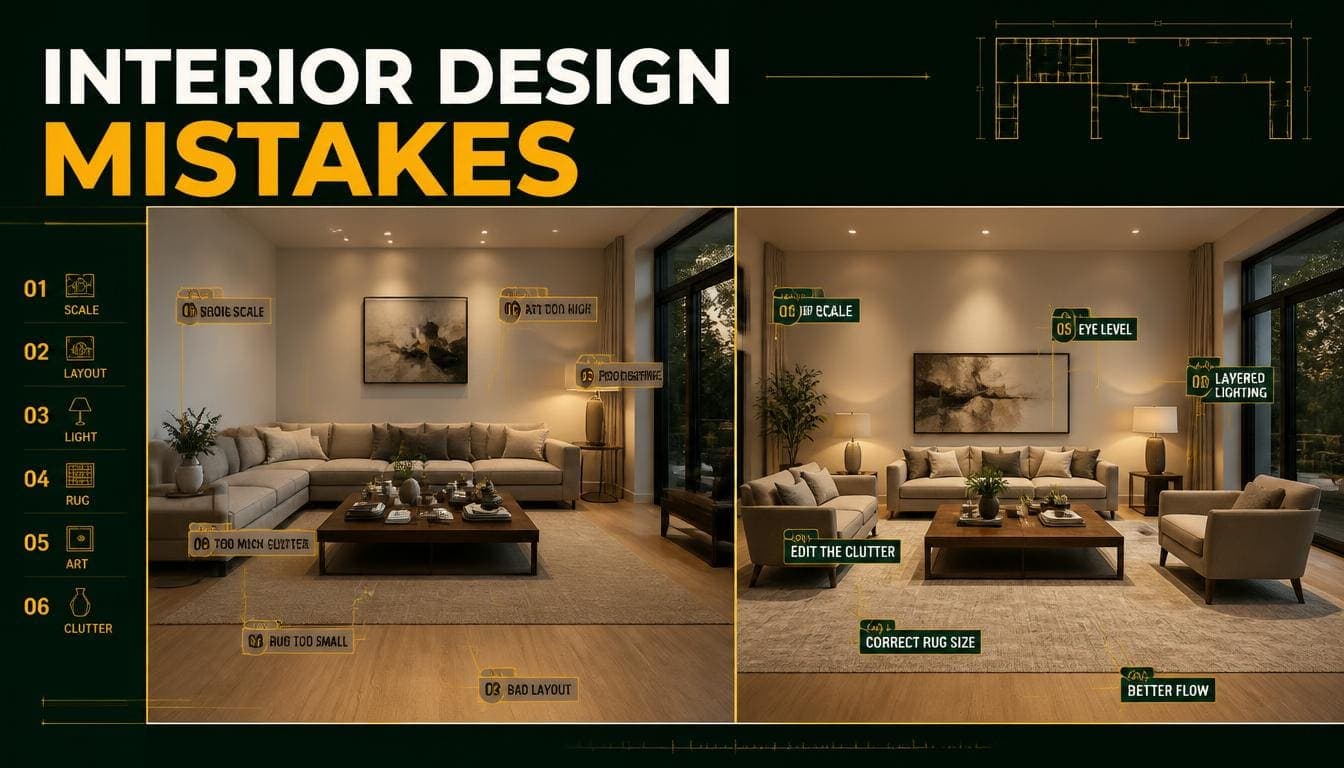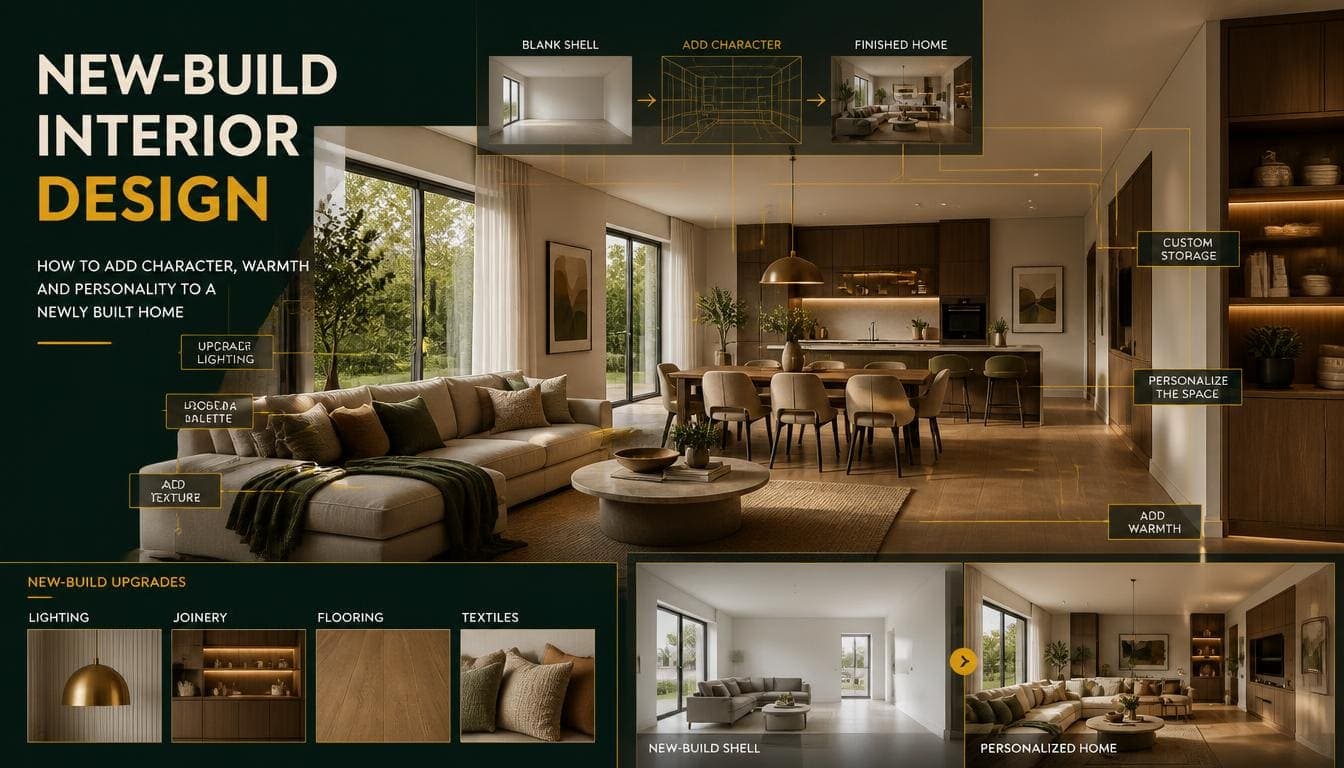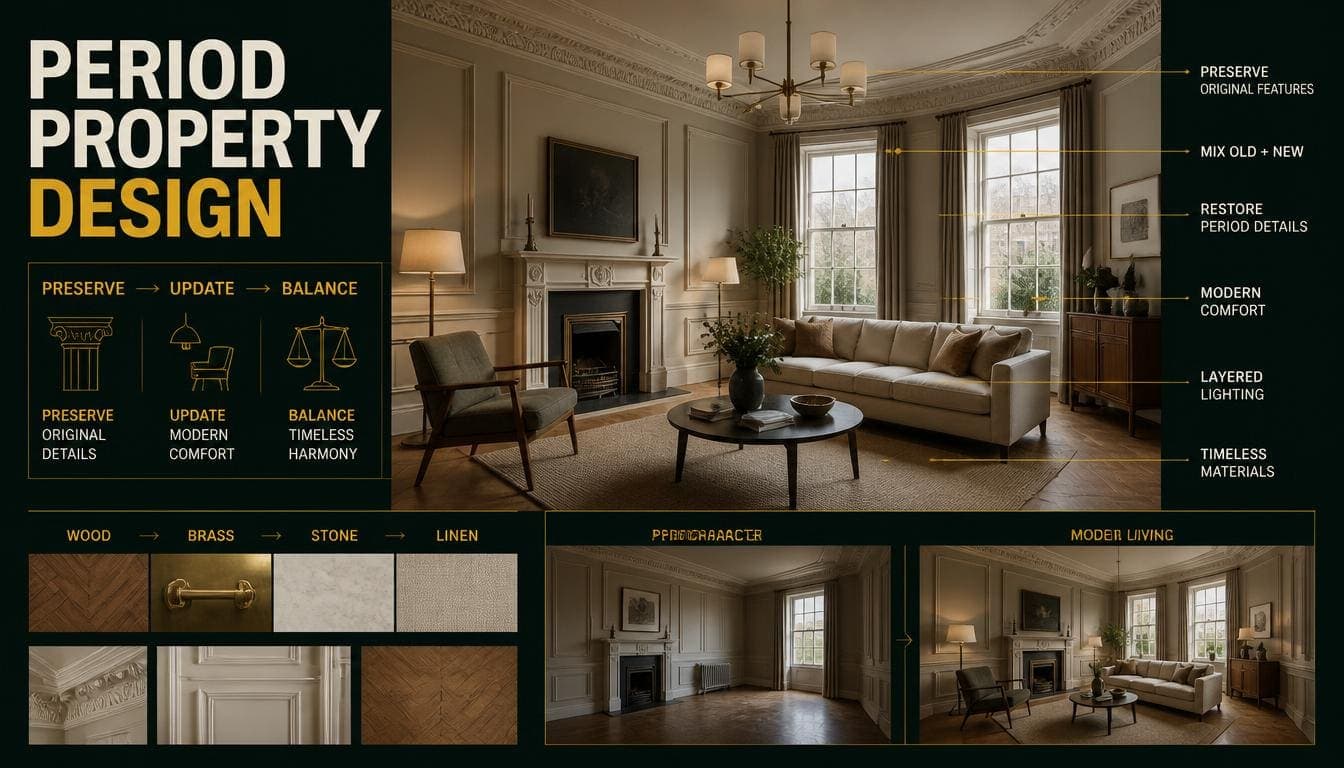
Mid-century modern has been continuously fashionable since the 1950s, which is unusual enough to be worth explaining. Most design movements have a peak, a decline, and a revival. This one never fully declined.
The reason is structural: the furniture is proportioned for smaller rooms, raised on legs that show floor, and finished in materials that read as warm rather than clinical. Those characteristics happen to be exactly what makes rooms photograph well.
What Mid-Century Modern Is
The period runs roughly 1945 to 1969, centred on American and Scandinavian designers working in the aftermath of the Second World War.
The context matters: post-war housing was smaller than pre-war housing, materials were constrained, and manufacturing had shifted toward mass production. The furniture that emerged was designed around those limits.
Core Characteristics
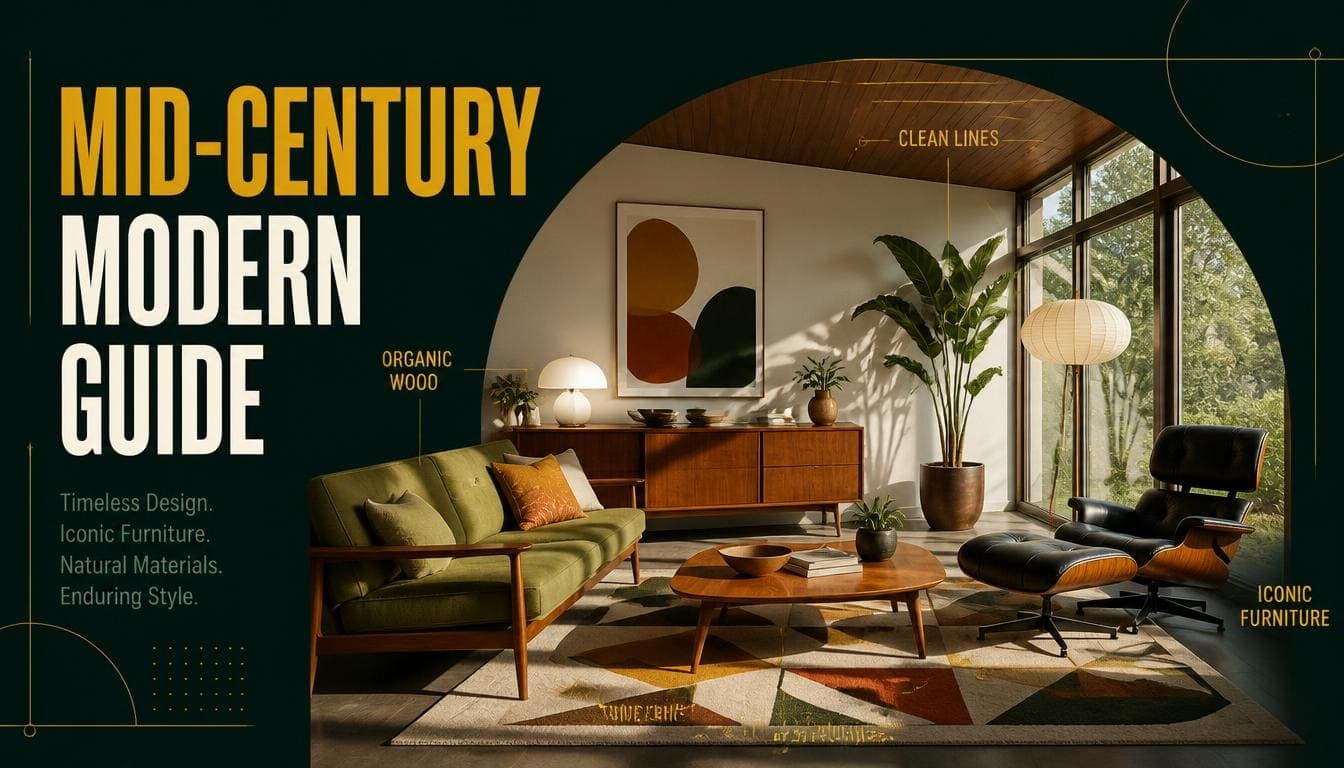
Tapered legs — The single most recognizable feature. Furniture raised on slim, often angled wooden legs.
Organic curves — Rounded backs, kidney-shaped tables, moulded plywood forms. Softer than the strict geometry of earlier Modernism.
Low profile — Sofas and chairs sit lower than their traditional equivalents. Ceiling height reads as more generous.
Warm woods — Teak, walnut, and rosewood. Mid to dark tones with visible grain.
Function-driven form — Nothing decorative for its own sake, but comfort was a genuine consideration in a way it wasn't for stricter Modernism.
Restrained ornament — Clean surfaces, minimal detail, no carving or moulding.
Colour used deliberately — A single saturated accent against neutral, rather than an all-neutral scheme.
Try DecoAI Free
3 free credits. No credit card needed. Stage any room in 30 seconds.
Get 3 Free CreditsWhy It Photographs So Well
This is the practical reason it matters for staging.
Visible Legs Show Floor
Furniture raised on tapered legs leaves visible floor beneath it. The eye reads continuous floor as more space.
A mid-century sofa and a solid-base modern sofa can occupy identical footprints, and the mid-century one will make the room look larger.
Low Profile Leaves Visible Wall
Low-backed seating means more wall visible above it, which makes ceilings feel higher and rooms feel less compressed.
Warm Wood Adds Depth Without Weight
Teak and walnut give an image tonal variation that all-neutral schemes lack, without the visual heaviness of Traditional's darker matched furniture.
It's Proportioned for Small Rooms
Designed for post-war housing, mid-century furniture is genuinely smaller than most contemporary equivalents. That suits the compact rooms in a large proportion of housing stock.
Clean Surfaces Photograph Cleanly
No carving, no moulding, no detail to catch shadow. The forms read clearly at any resolution.
Mid-Century Modern vs Modern
These get used interchangeably. Mid-century modern is a subset of Modern, with distinct characteristics.
| Factor | Modern (general) | Mid-century modern |
|---|---|---|
| Period | 1920–1960 | 1945–1969 |
| Lines | Strictly geometric | Organic curves |
| Wood tones | Any, often light | Teak, walnut, rosewood |
| Colour | Neutral with minimal accent | Neutral with one saturated accent |
| Legs | Often present | Tapered, defining feature |
| Warmth | Cooler | Warmer |
The practical difference: Modern is more disciplined; mid-century is warmer and more comfortable. For residential staging, mid-century usually reads better.
The Mid-Century Palette
Base Colours
- Warm white and off-white — walls
- Teak and walnut — furniture, providing the tonal warmth
- Soft grey and oatmeal — upholstery
- Warm cream
Accent Colours
The characteristic mid-century accents, used one at a time:
- Mustard yellow
- Burnt orange
- Olive green
- Teal
- Occasionally red — used very sparingly
These are saturated rather than muted, which distinguishes mid-century from Scandinavian's softer accents.
Materials
- Teak, walnut, and rosewood
- Moulded plywood
- Leather in tan and cognac
- Wool in flat weaves
- Brass and brushed steel
- Glass
Mid-Century by Room
Living Room
Furniture: Low sofa with tapered legs, one or two moulded or upholstered accent chairs, low rectangular or organic-shaped coffee table, sideboard on legs
Palette: Warm white walls, oatmeal or grey upholstery, one saturated accent
Textiles: Flat-weave wool rug, often with a simple geometric pattern
Lighting: Arc floor lamp, globe pendant, or a Sputnik-style fixture
Art: Abstract pieces, often in a single strong colour
The characteristic piece: a walnut sideboard on tapered legs. It reads as mid-century immediately.
Bedroom
Furniture: Low platform bed, matching bedside tables on legs, low dresser
Palette: Warm white walls, white or oatmeal bedding, wood tones
Lighting: Bedside lamps with simple conical or globe shades
Avoid: Tall headboards, heavy frames, anything ornate
Dining Room
Furniture: Oval or rectangular table in teak or walnut, moulded or upholstered chairs on tapered legs
Lighting: A globe pendant or a Sputnik fixture centred over the table
Detail: A sideboard in matching wood
The characteristic detail: chairs with a moulded shell on wooden legs. Instantly readable as the period.
Home Office
Furniture: Simple wooden desk with tapered legs, a moulded or leather task chair
Palette: Warm white, wood, one accent
Lighting: Adjustable arm lamp in brass or matte finish
Try DecoAI Free
3 free credits. No credit card needed. Stage any room in 30 seconds.
Get 3 Free CreditsWhere Mid-Century Wins in Staging
Small and Mid-Sized Rooms
The furniture was designed for exactly this scale. It fits where contemporary furniture doesn't.
Properties Built 1940–1980
Where the architecture is from the same period, mid-century furnishing reads as coherent rather than applied.
Urban Apartments
Compact proportions, warm tones, and broad demographic appeal.
Properties Needing Warmth Without Traditional
Where Modern reads as cold but Traditional reads as dated, mid-century sits between them.
Broad Demographic Appeal
It's one of the few styles that reads as current to buyers across a wide age range. Older buyers recognize it; younger buyers see it as fashionable.
Longer Listings
Because it's been continuously current for seventy years, it doesn't date during a listing period.
Where It Falls Short
Very Large Rooms
Mid-century furniture is proportioned for smaller spaces. In a generous room, it can look undersized.
Period Properties
Victorian or Georgian architecture with cornicing and panelling sits awkwardly against mid-century furnishing. Traditional or Transitional suits better.
Premium and Luxury Properties
Mid-century reads as considered rather than opulent. At high price points, Luxury signals the tier more directly.
Family Markets Wanting Comfort
Low seating and firm upholstery read as stylish rather than comfortable. Contemporary or Traditional performs better where family comfort is the priority.
Rural and Traditional Markets
Where buyer preferences skew conservative, mid-century can read as urban.
Common Mistakes
1. Too Many Accent Colours
Mid-century uses one saturated accent. Mustard, orange, and teal together produces something closer to Bohemian.
2. Wrong Wood Tone
Light Scandinavian birch reads as a different style. Teak and walnut are correct.
3. Furniture Without Legs
The tapered legs are definitional. Solid-base furniture in a mid-century palette isn't mid-century.
4. Overloading with Period Pieces
A room where every item is recognizably mid-century reads as a museum rather than a home. Mix in some neutral contemporary pieces.
5. Using It in Large Rooms
The scale doesn't fill generous proportions well.
6. Confusing It with Scandinavian
Both use wood and clean forms, but Scandinavian uses pale wood and muted accents; mid-century uses dark wood and saturated ones.
Frequently Asked Questions
What is mid-century modern design?
A design movement from roughly 1945–1969 characterized by tapered legs, organic curves, low-profile furniture, warm woods like teak and walnut, and a single saturated accent colour against neutral.
What's the difference between mid-century modern and modern?
Mid-century is a subset of Modern with organic curves rather than strict geometry, warmer wood tones, and defining tapered legs. Modern is cooler and more disciplined.
Why has mid-century modern stayed popular?
The furniture is proportioned for smaller rooms, raised on legs that show floor, and finished in warm materials. Those characteristics remain useful regardless of trend.
Is mid-century modern good for staging?
Yes, particularly in small to mid-sized rooms and properties built between 1940 and 1980. It photographs exceptionally well because visible legs and low profiles show more floor and wall.
What colours are mid-century modern?
Warm white and teak as the base, with one saturated accent — mustard, burnt orange, olive, or teal.
What wood is used in mid-century modern?
Teak, walnut, and rosewood. Mid to dark tones with visible grain. Pale birch reads as Scandinavian rather than mid-century.
What's the difference between mid-century and Scandinavian?
Scandinavian uses pale wood and muted accents; mid-century uses dark wood and saturated ones. Scandinavian is lighter and calmer; mid-century is warmer and bolder.
Does mid-century work in large rooms?
Less well. The furniture was designed for post-war housing and is genuinely smaller than contemporary equivalents. In generous rooms it can look undersized.
What's the most recognizable mid-century piece?
A walnut sideboard on tapered legs, or a moulded shell chair on wooden legs. Both read as the period immediately.
Summary
What it is: 1945–1969 design characterized by tapered legs, organic curves, low profiles, warm dark woods, and one saturated accent.
Why it works for staging: Visible legs show floor, low profiles show wall, warm wood adds depth without weight, and the scale suits smaller rooms.
Use it for: Small and mid-sized rooms, properties built 1940–1980, urban apartments, and anywhere you need warmth without Traditional's dated signals.
Skip it for: Very large rooms, period properties, premium listings, and family markets prioritizing comfort.
The defining rule: tapered legs on everything. Furniture without visible legs in a mid-century palette isn't mid-century.
See how it reads in your space. DecoAI gives 3 free credits with no card required — enough to compare Modern, mid-century-leaning Modern, and Scandinavian in the same room.