Modern interior design is the most misused term in the field. Most people use it to mean "current" or "not old-fashioned" — but Modern refers to a specific design movement with defined characteristics, roughly spanning 1920 to 1960.
That distinction matters practically. If you ask a designer for a "modern" room and mean "current," you'll get something you didn't expect. And if you're choosing a staging style, knowing what Modern actually delivers tells you whether it fits your property.
What Modern Interior Design Actually Is
Modern design emerged from the early 20th-century Modernist movement — Bauhaus in Germany, De Stijl in the Netherlands, and later Mid-Century Modern in America.
The core principle: form follows function. Every element serves a purpose. Ornament that exists only to decorate gets removed.
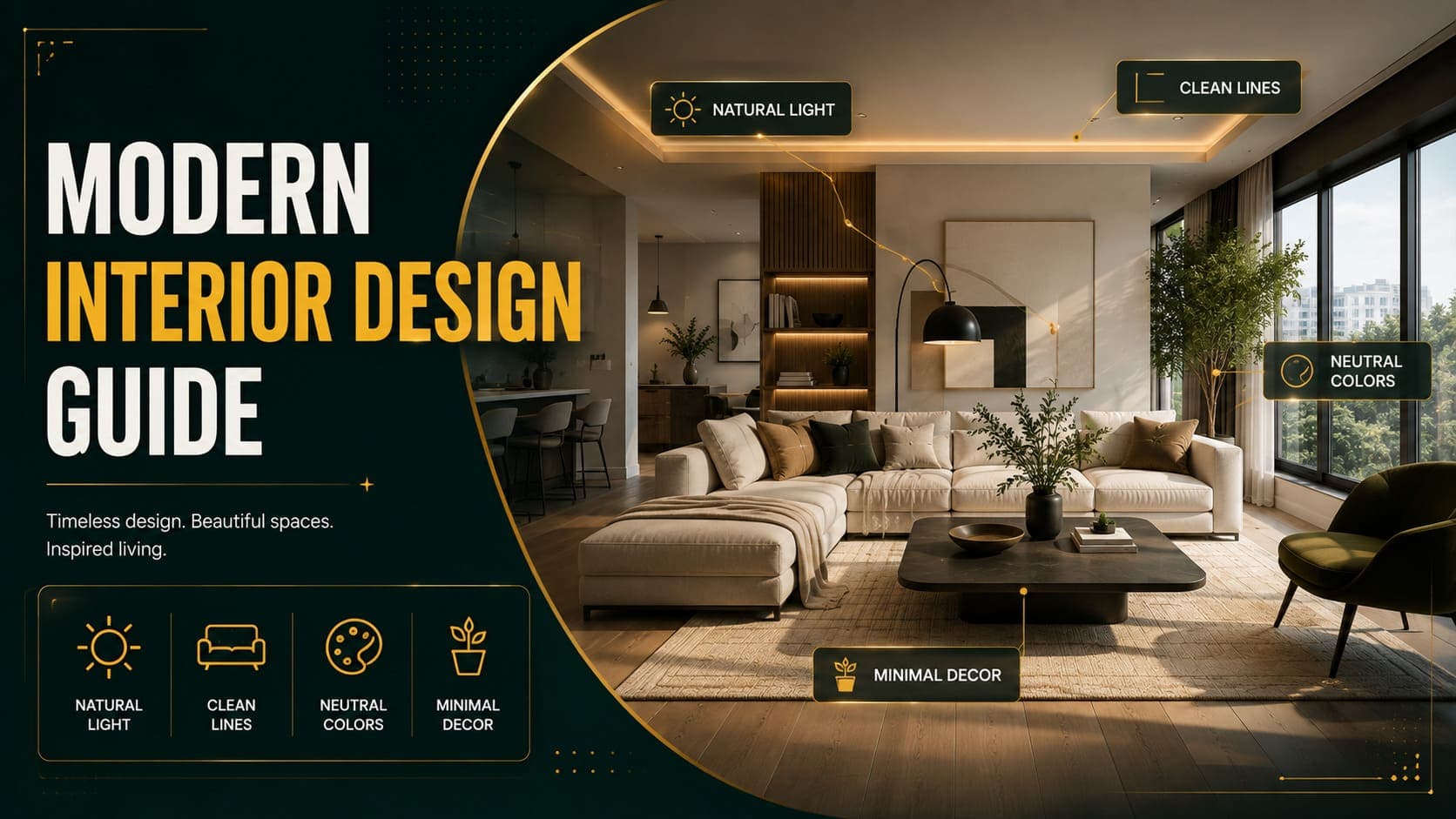
Defining Characteristics
Clean lines — Straight edges, simple geometry, minimal curves except where structurally purposeful.
Neutral palette — White, grey, black, and natural wood tones dominate. Colour appears as a deliberate accent, not as a base.
Low profile furniture — Sofas sit lower to the ground than traditional equivalents. Beds are platform-style rather than tall frames.
Visible legs — Furniture is raised on slim legs rather than sitting flush to the floor. This is characteristic of Mid-Century Modern in particular.
Natural materials, honestly used — Wood that looks like wood, steel that looks like steel, no imitation finishes.
Uncluttered surfaces — Minimal decorative objects. Surfaces are largely clear.
Function-driven layout — Furniture placed for use, not for symmetry.
Try DecoAI Free
3 free credits. No credit card needed. Stage any room in 30 seconds.
Get 3 Free CreditsModern vs Contemporary: The Difference
These get conflated constantly. They're distinct.
| Factor | Modern | Contemporary |
|---|---|---|
| Definition | A specific movement, roughly 1920–1960 | Whatever is current, always shifting |
| Lines | Straight, geometric | Softer, more curves |
| Palette | Strict neutrals with accent colour | Broader, includes warm tones |
| Materials | Wood, steel, glass, leather | Mixed and varied |
| Feel | Precise, restrained | Comfortable, layered |
| Changes over time | No — it's historical | Yes — by definition |
Simple test: Modern is a fixed style you could identify in a 1955 photograph. Contemporary is whatever a designer would produce today.
In practice: Contemporary is warmer and more forgiving. Modern is sharper and more disciplined.
The Modern Colour Palette
Base Colours
- White — the dominant wall colour
- Warm grey — softer alternative to white for walls
- Charcoal — used for contrast, often on one wall or in large furniture
- Natural wood — walnut, oak, teak in mid-tones
Accent Colours
Modern uses colour sparingly and deliberately. Typical accents:
- Mustard yellow
- Burnt orange
- Olive green
- Deep teal
- Occasionally red, used minimally
These come from the Mid-Century Modern palette specifically and appear in a single chair, a cushion, or a piece of artwork — not across the room.
What Modern Avoids
- Pastels
- Multiple competing accent colours
- Heavy patterns
- Metallic finishes beyond brushed steel or brass
Modern Furniture Characteristics
Seating
Low-backed sofas with clean, straight arms. Fabric in neutral tones — grey, oatmeal, charcoal. Leather in tan or black.
Slim tapered legs, usually wood, raising the piece off the floor.
Iconic examples: Eames Lounge Chair, Barcelona Chair, Egg Chair.
Tables
Coffee tables in wood, glass, or a combination. Rectangular or oval rather than ornate shapes. Low, matching the seating height.
Dining tables with straight edges and simple leg structures.
Storage
Sideboards and credenzas with flat fronts, no decorative moulding, often on legs. Wood grain visible and celebrated rather than painted over.
Lighting
Sculptural but simple. Arc floor lamps, globe pendants, and the Sputnik-style fixtures characteristic of the mid-century period.
Lighting is functional first but chosen as a design element.
Try DecoAI Free
3 free credits. No credit card needed. Stage any room in 30 seconds.
Get 3 Free CreditsModern by Room
Living Room
Furniture: Low sofa, one or two accent chairs, rectangular coffee table, sideboard Palette: White or grey walls, neutral upholstery, one accent colour Floor: Wood or large-format tile, rug in a solid neutral or simple geometric pattern Lighting: Floor lamp plus a statement pendant
Bedroom
Furniture: Platform bed, matching bedside tables on slim legs, low dresser Palette: White or soft grey walls, white bedding, wood tones Floor: Wood, with a rug extending beyond the lower two-thirds of the bed Avoid: Heavy headboards, ornate frames, patterned bedding
Kitchen
Cabinets: Flat-front, handleless or with slim linear pulls Palette: White, grey, or wood-fronted units Worktops: Quartz, concrete, or stainless steel Lighting: Linear pendants over an island
Home Office
Furniture: Simple desk with straight edges, mid-century style chair, low shelving Palette: White walls, wood desk, one accent piece Lighting: Task lamp with a simple arm
Dining Room
Furniture: Rectangular or oval table with straight legs, matching chairs Palette: Neutral, with wood as the warmth source Lighting: Pendant centred over the table Avoid: Ornate chairs, heavy tablecloths, elaborate centrepieces
When Modern Works for Staging
Best Fit
- Urban apartments and condos — Modern's restraint suits compact city living
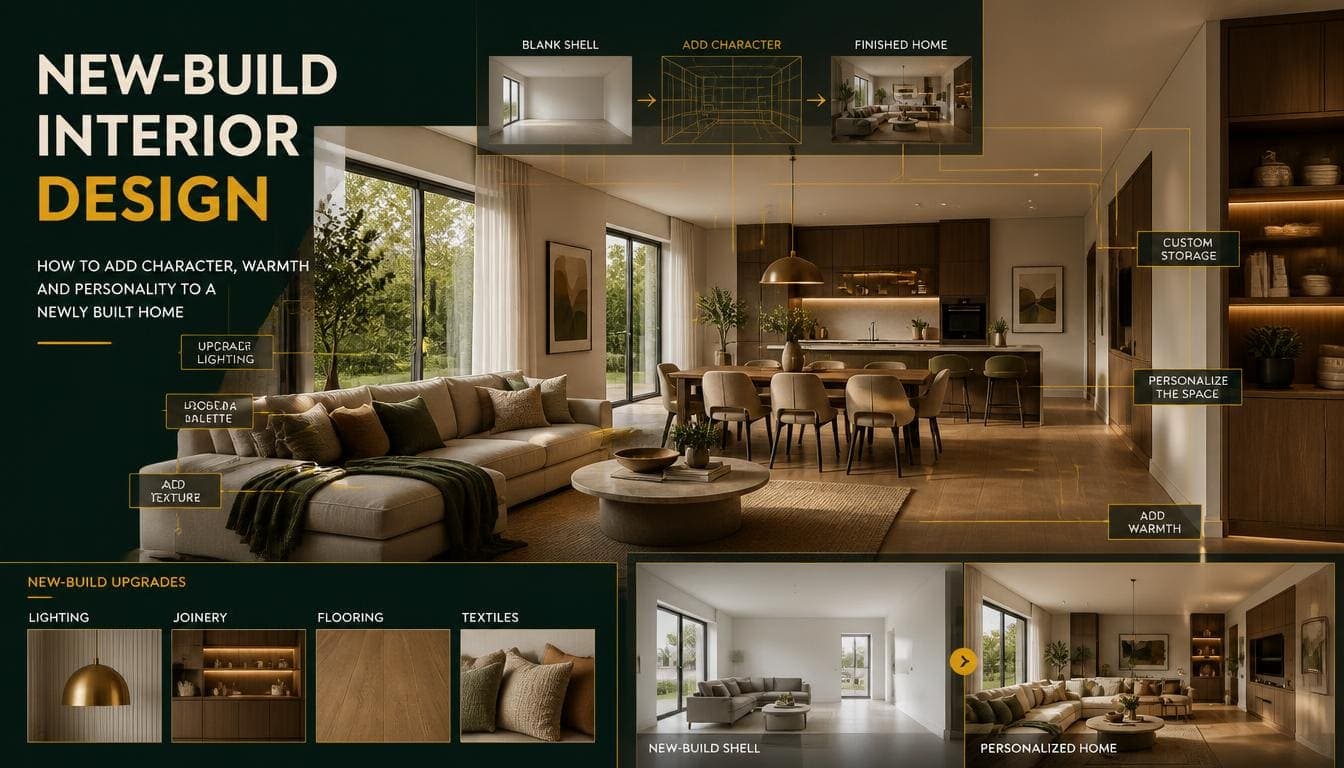
- New builds — The architecture usually already leans Modern
- Professional buyer demographics — Broad appeal to working buyers under 50
- Properties where you're unsure — Modern is the lowest-risk default
Why It Performs
Modern photographs exceptionally well. The neutral palette reads cleanly, the low furniture leaves visible wall above it, and the uncluttered surfaces give the eye room to assess the space itself.
It's also culturally neutral — it doesn't signal a specific demographic, era, or taste, which means it rarely alienates anyone.
Where Modern Falls Short
Family homes — Can read as cold. Families often respond better to Contemporary or Traditional warmth.
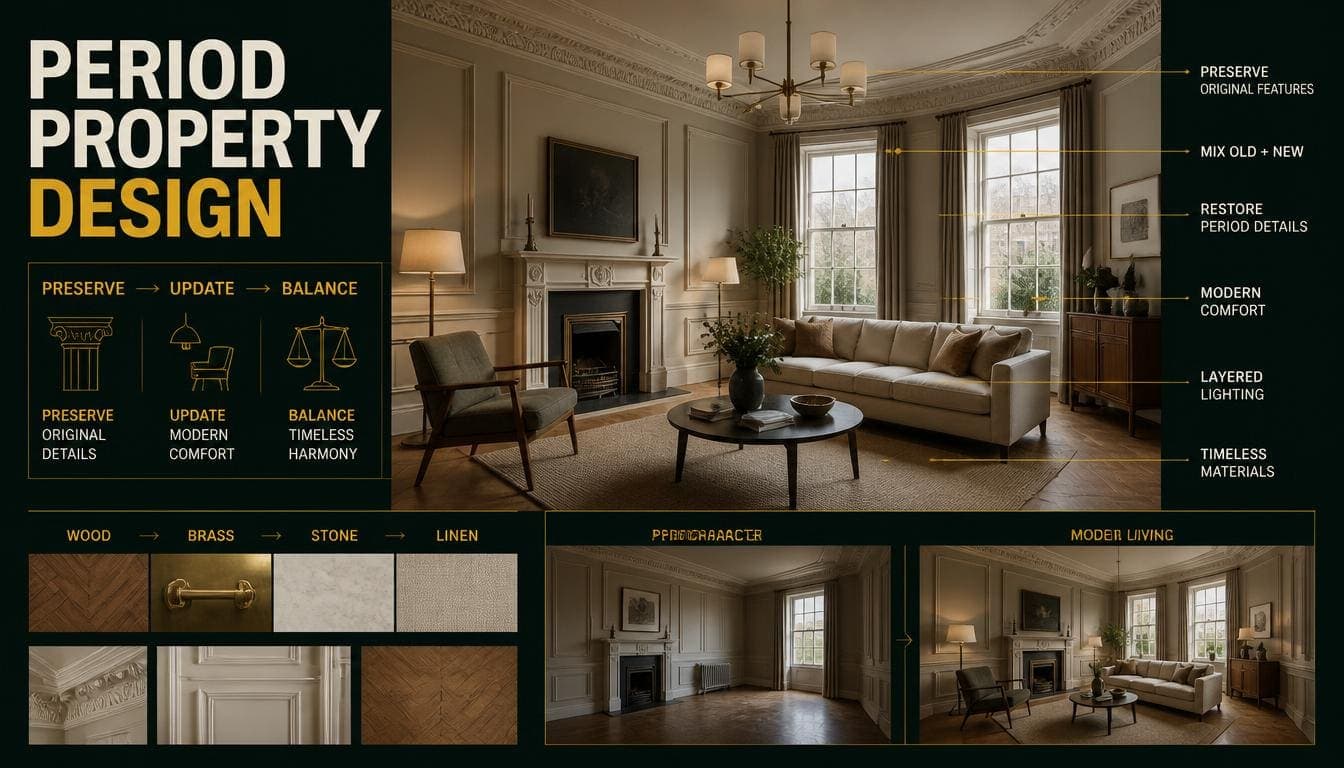
Period properties — Modern staging in a Victorian house with crown moulding and ornate fireplaces creates visual conflict.
Very large rooms — Modern's restraint can leave big spaces feeling underfurnished.
Rural and traditional markets — Buyers in established suburban or rural markets often prefer the familiarity of Traditional.
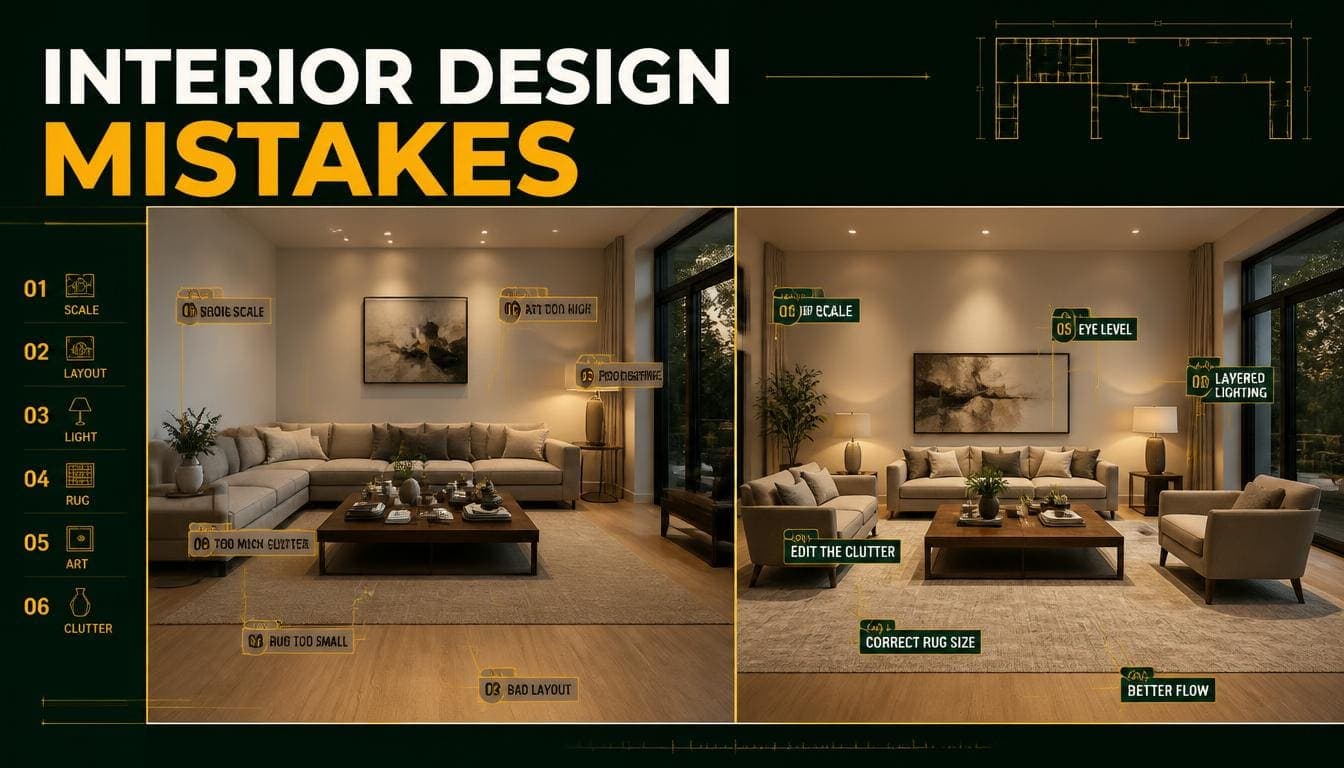
Common Modern Design Mistakes
1. Confusing Modern with Minimalist
Modern has furniture, texture, and warmth. Minimalist strips to the essential. A Modern room can feel lived in; a Minimalist one deliberately doesn't.
2. Too Many Accent Colours
Modern uses one accent, deployed sparingly. Three or four competing accents produces something else entirely.
3. Ignoring Texture
An all-white, all-smooth Modern room feels sterile. Texture — a wool rug, a leather chair, visible wood grain — is what keeps it warm.
4. Mixing in Ornate Pieces
A carved wooden cabinet in an otherwise Modern room reads as an error. Modern's discipline is part of the effect.
5. Using It on Period Properties
A Georgian townhouse staged Modern creates a conflict between the architecture and the furnishing. Traditional or Contemporary usually suits period features better.
6. Forgetting the Legs
Furniture sitting flush to the floor isn't Modern. Visible legs are one of the defining characteristics, and they also make rooms look larger.
Frequently Asked Questions
What is modern interior design?
A design movement roughly spanning 1920–1960, characterized by clean lines, neutral palettes, low-profile furniture on visible legs, natural materials, and the principle that form follows function.
What's the difference between modern and contemporary?
Modern is a fixed historical style. Contemporary means whatever is current and shifts over time. Modern is sharper and more disciplined; Contemporary is warmer and more layered.
What colours are used in modern interior design?
White, grey, charcoal, and natural wood as the base. One accent colour used sparingly — typically mustard, burnt orange, olive, or teal.
Is modern design good for small spaces?
Yes. Low-profile furniture on visible legs shows more floor and wall, which makes rooms read as larger. Scandinavian performs similarly and is slightly warmer.
Does modern design work for family homes?
It can read as cold in family contexts. Contemporary offers similar cleanliness with more warmth, and usually performs better in family markets.
What furniture defines modern design?
Low sofas with straight arms and tapered legs, rectangular coffee tables, flat-front sideboards on legs, platform beds, and sculptural but simple lighting.
Is modern the same as mid-century modern?
Mid-Century Modern is a subset of Modern, roughly 1945–1965, and is the version most people picture. It's characterized by the tapered legs, organic curves, and warm wood tones associated with designers like Eames and Saarinen.
Should I use modern staging for a period property?
Usually not. Modern furnishing in a room with crown moulding, panelling, or ornate fireplaces creates visual conflict. Traditional or Contemporary suits period features better.
What's the safest style for staging if I'm unsure?
Modern for urban properties, Contemporary for suburban ones. Both are low-risk defaults that rarely produce a bad result.
Summary
Modern interior design is defined, not vague: clean lines, neutral palette, low furniture on visible legs, natural materials, and no ornament for its own sake.
Use it when: the property is urban, the architecture is contemporary, the buyer skews professional, or you need a safe default.
Skip it when: the property has period features, the market is family-oriented and traditional, or the rooms are very large.
The distinction that matters most: Modern is a specific style, not a synonym for current. Contemporary is what most people actually mean when they say modern — and it's often the better staging choice for family and suburban properties.
See how Modern looks in your space. DecoAI gives 3 free credits with no card required — enough to compare Modern against Contemporary and Scandinavian in the same room.