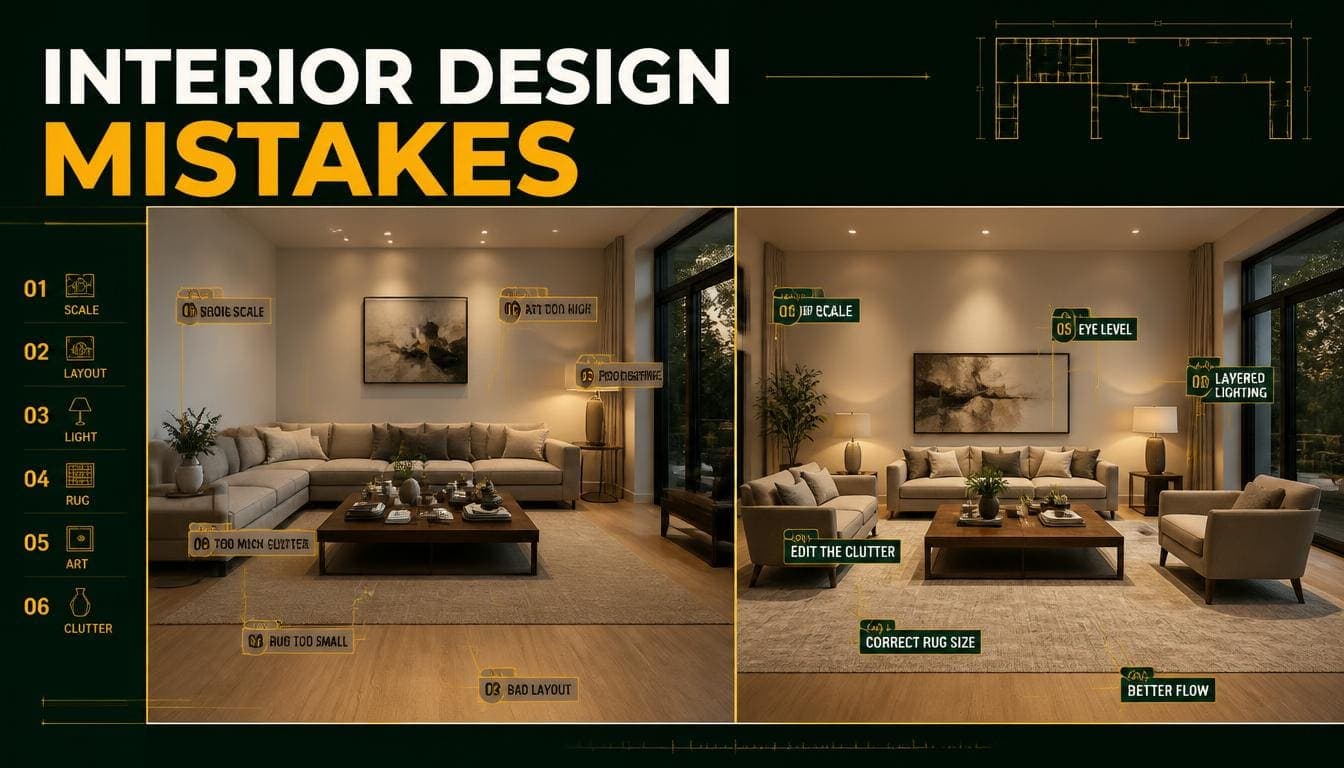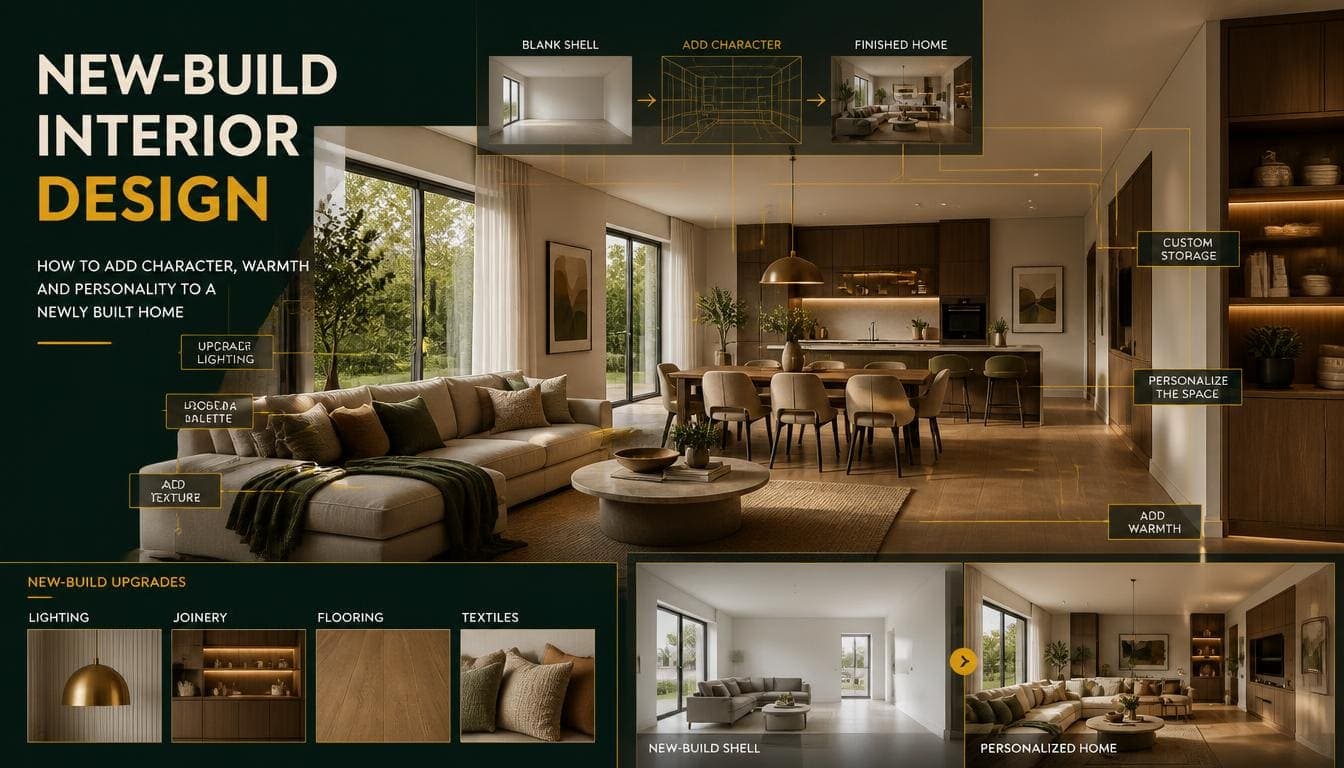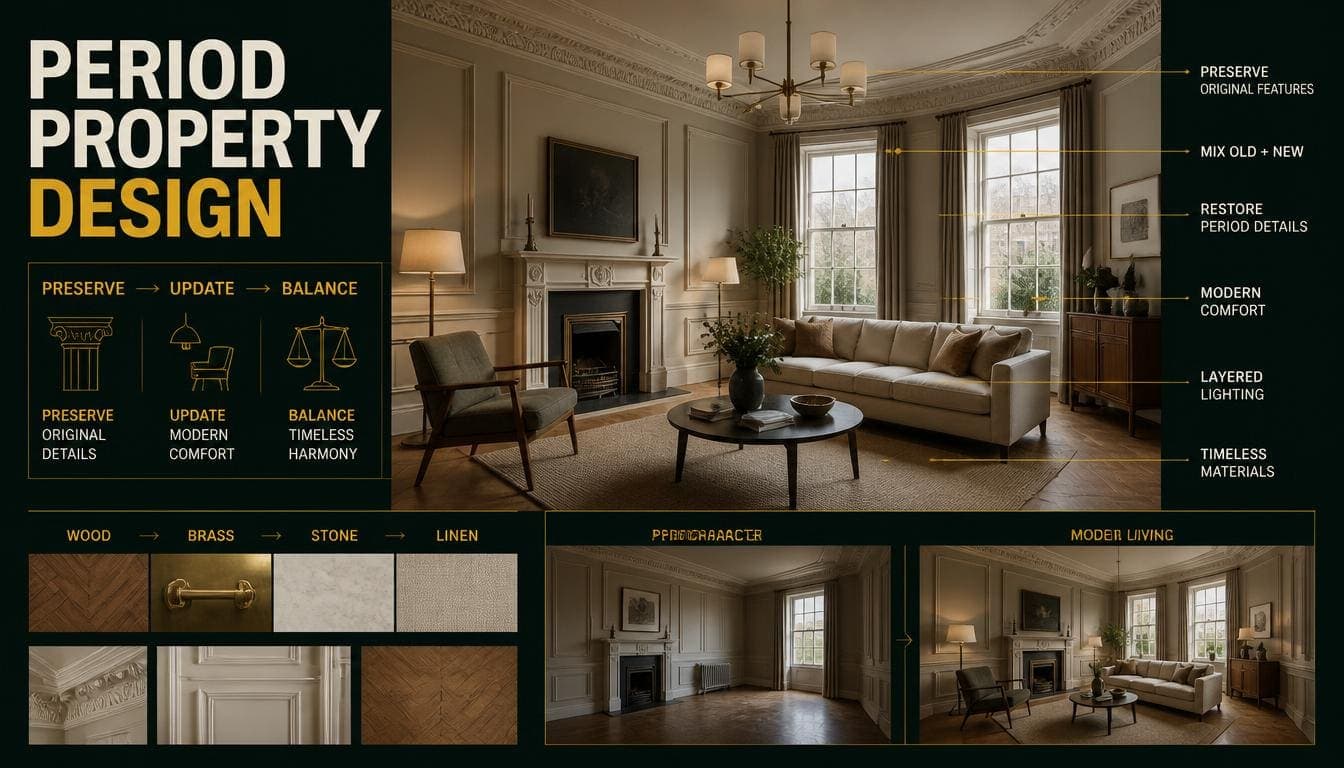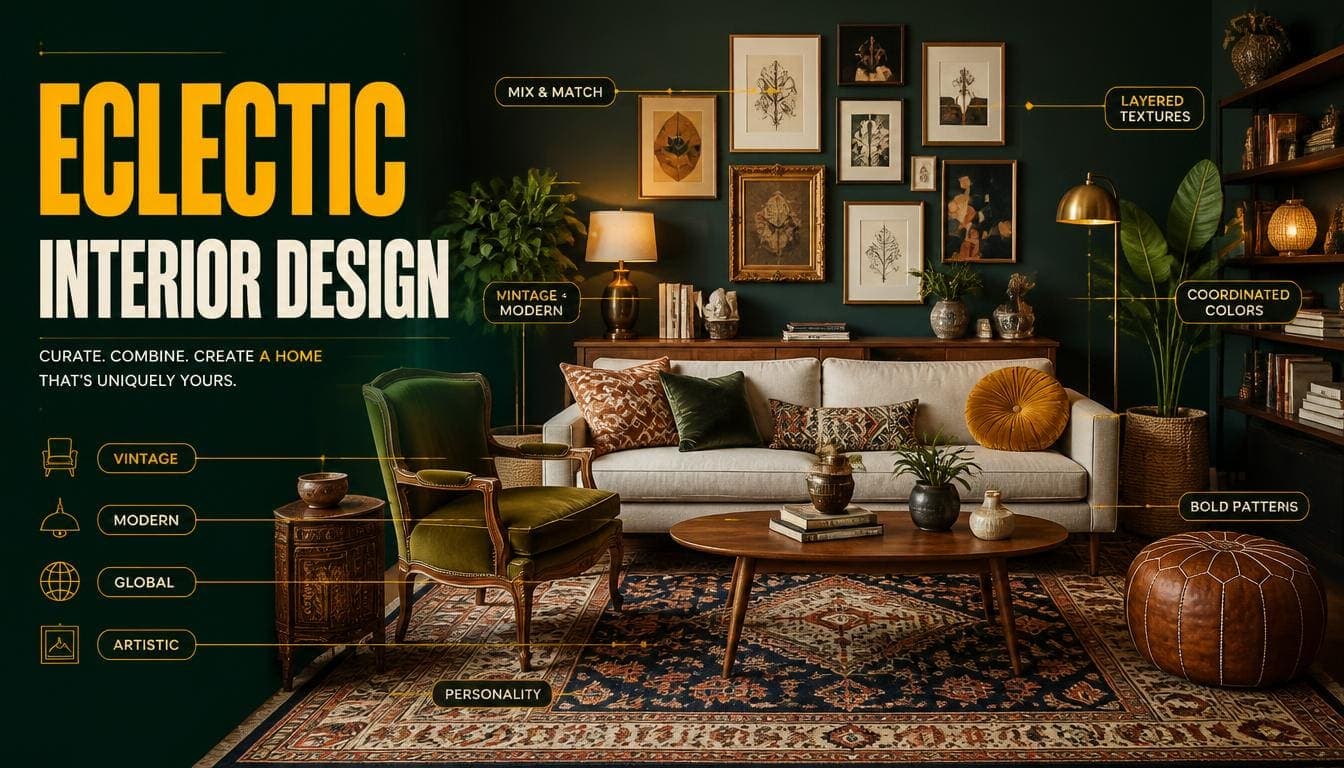
Eclectic design gets treated as a default for rooms that haven't been decided — a label applied after the fact to a space full of unrelated things.
Done deliberately, it's the opposite. Eclectic is a method for combining pieces from different periods and styles so they read as a coherent collection rather than an accumulation. It requires more judgment than working within a single style, not less.
This covers the rules that make it work, and where the line sits between eclectic and cluttered.
What Eclectic Actually Means
Not a Style — A Method
Modern, Scandinavian, and Industrial are styles with defined palettes, materials, and forms.
Eclectic has none of those. It's an approach: take pieces from multiple sources and unify them through something other than shared style.
What Unifies an Eclectic Room
Since style isn't doing the work, something else has to. Usually one or more of:
Colour — a consistent palette across pieces from different periods.
Material — repeated use of wood, brass, or a particular fabric.
Scale — pieces proportioned consistently even when their styles differ.
Era grouping — two or three periods rather than eight.
Function — everything serving the room clearly, with no purely decorative filler.
Without at least one of these, a mixed room is just mixed.
Try DecoAI Free
3 free credits. No credit card needed. Stage any room in 30 seconds.
Get 3 Free CreditsThe Rules
1. Pick One Unifying Thread
Decide upfront what holds the room together.
Common choices:
- A tight colour palette across everything
- Warm wood tones in every piece regardless of style
- Consistent metal finish — all brass, or all matte black
- A consistent upholstery fabric across mismatched frames
The test: if you removed the thread, would the room still read as coherent? If yes, you have more than one. If the room falls apart, the thread is doing real work.
2. Limit the Number of Periods
Two or three, not six.
A mid-century sofa with a Victorian side table and a contemporary rug can work. Add an Art Deco cabinet, a rustic bench, and an industrial shelf and the room loses any readable logic.
3. Establish a Dominant Style
Eclectic rooms work best when one style is clearly in the majority — roughly 60–70% — with the others as accents.
A predominantly mid-century room with two antique pieces reads as considered.
Equal parts of four styles reads as unresolved.
4. Repeat Each Element at Least Twice
A single Victorian chair in an otherwise modern room reads as leftover. Two or three period pieces read as a deliberate choice.
The principle: repetition signals intent. Singularity signals accident.
5. Match Scale, Not Style
Pieces from different eras can coexist if they're proportioned similarly.
What clashes: a delicate Victorian chair beside a heavy contemporary sectional. The style difference is fine; the weight difference isn't.
What works: a mid-century chair beside a contemporary sofa, both low-profile, both similarly substantial.
6. Keep the Background Quiet
Eclectic furniture needs a neutral setting. Walls, flooring, and large surfaces should be calm so the mixed pieces are what the eye reads.
Patterned wallpaper plus mixed-era furniture produces competition rather than combination.
7. Leave Negative Space
Mixed rooms need more breathing room than single-style rooms, because the eye is doing more work.
Practical: one clear surface, one less-dense wall, visible floor.
Eclectic vs Maximalist vs Bohemian
Three styles that all involve mixing, and get conflated constantly.
| Factor | Eclectic | Maximalist | Bohemian |
|---|---|---|---|
| What it mixes | Periods and styles | Pattern, colour, objects | Global influences, textures |
| Palette | Usually restrained | Saturated, deep | Warm earth tones |
| Density | Moderate | Very high | High |
| Structure | One unifying thread | Strict palette rules | Loose |
| Background | Neutral | Often bold | Warm neutral |
| Materials | Varied | Velvet, brass, lacquer | Natural fibre, rattan |
The distinctions:
Eclectic is about combining periods. It can be quite restrained.
Maximalist is about quantity — pattern, colour, and objects at high density.
Bohemian is about character — natural materials, global references, relaxed layering.
A room can be more than one. Eclectic Maximalism exists. So does restrained Eclectic, which looks nothing like either of the others.
Try DecoAI Free
3 free credits. No credit card needed. Stage any room in 30 seconds.
Get 3 Free CreditsHow to Build an Eclectic Room
Start With One Anchor Piece
Usually the largest item — a sofa, a bed, a dining table.
Choose it for quality and proportion rather than for style. This piece sets the scale everything else works with.
Add a Second Era
One or two pieces from a different period, in a related tone or material.
Example: a contemporary linen sofa with two mid-century walnut side tables.
At this point the room is already eclectic, with just two eras and a wood-tone thread.
Add a Third, Sparingly
If a third era enters, keep it to one or two pieces.
Example: an antique mirror above the sofa, or a vintage rug.
Unify With Textiles
Cushions, throws, and curtains in a consistent palette pull disparate furniture together more effectively than anything else.
This is the cheapest fix for a room that feels mixed rather than eclectic.
Repeat the Metal
If there's brass on a lamp, put brass somewhere else — a frame, a handle, a small object. Consistent metal finish is one of the strongest unifying threads available.
Edit at the End
Remove one or two things. Mixed rooms almost always improve with slightly less in them.
Where Eclectic Works
Period Properties With Character
Buildings with architectural interest support mixed furnishing because the architecture provides its own layer of history.
Homes People Have Lived In
Eclectic reads as accumulated over time, which suits homes that genuinely have been.
Larger Rooms
Mixed pieces need space between them to read as individual rather than crowded.
Creative and Design-Aware Markets
Where distinctiveness is valued over broad neutral appeal.
When You Already Own Mixed Furniture
The practical case. Most people don't buy a matched set — eclectic is a method for making what you already have work together.
Where It Doesn't
Property Staging
The clearest case against. Staging works by helping buyers project themselves onto a space. Eclectic rooms read as belonging to a specific person with specific taste.
For property marketing, single-style staging outperforms eclectic substantially.
Small Rooms
Mixed pieces need space to breathe. In a compact room they crowd.
Rental Properties
Broad neutral appeal matters more than character.
New Builds With Minimal Architecture
Clean contemporary shells don't provide the historical layer that supports mixed furnishing. It can work, but the room does all the work alone.
When the Budget Is Tight
Eclectic depends on individual pieces being good. Mixed cheap furniture reads as mismatched rather than curated.
Common Eclectic Mistakes
1. No Unifying Thread
The defining error. Without colour, material, scale, or era consistency, mixed is just mixed.
2. Too Many Periods
Two or three. Six reads as a junk shop.
3. No Dominant Style
Equal parts of everything means nothing anchors the room.
4. Single Pieces From Each Era
One Victorian chair reads as leftover. Two or three period pieces read as deliberate.
5. Mismatched Scale
Style differences work. Weight differences don't. A delicate chair beside a heavy sectional clashes regardless of era.
6. Busy Background
Patterned walls plus mixed furniture produces competition.
7. Not Editing
Mixed rooms accumulate. They almost always improve with one or two things removed.
8. Using It for Staging
Eclectic reads as someone else's taste, which is the opposite of what staging needs to do.
For Property Presentation
If the Property Is Furnished Eclectically
The question: is it well done or accumulated?
Well done: photograph it. Character and personality can be an asset in the right market, particularly for period properties and creative urban areas.
Accumulated: reduce substantially. Remove the pieces that don't fit the dominant style, and photograph what's left.
If You're Staging
Choose a single style. Contemporary, Modern, or Scandinavian depending on the property.
Eclectic staging is one of the few decisions that consistently underperforms, because it fills the space with a specific taste rather than leaving room for the buyer's.
The Practical Middle Ground
Predominantly one style with one or two contrasting pieces. This reads as considered without reading as personal.
A Contemporary room with one antique mirror or one vintage rug adds interest without narrowing appeal.
Frequently Asked Questions
What is eclectic interior design?
A method for combining pieces from different periods and styles so they read as a coherent collection, unified by something other than shared style — usually colour, material, or scale.
Is eclectic a real style?
Not in the way Modern or Scandinavian are. It's an approach to combining styles rather than a style with its own palette and forms.
How do I mix furniture styles without it looking messy?
Pick one unifying thread — a colour palette, wood tone, or metal finish. Limit yourself to two or three periods. Keep one style dominant at roughly 60–70%. Repeat each element at least twice.
How many styles can I mix?
Two or three periods. More than that and the room loses readable logic.
What's the difference between eclectic and maximalist?
Eclectic mixes periods and can be quite restrained. Maximalist is about density — pattern, colour, and objects at high volume. A room can be both.
Can I mix modern and antique furniture?
Yes, and it's the most common eclectic combination. Match the scale and weight of pieces rather than their styles, and unify with a consistent wood tone or metal finish.
Should I use eclectic staging for a property?
No. Eclectic reads as someone else's taste, which works against the buyer projecting themselves onto the space. Single-style staging performs better.
What makes eclectic look intentional rather than accidental?
Repetition. A single piece from an era reads as leftover; two or three read as a deliberate choice.
Does eclectic work in small rooms?
Poorly. Mixed pieces need space between them to read as individual rather than crowded.
Summary
What it is: a method for combining periods and styles, unified by colour, material, scale, or era grouping rather than by shared style.
The rules: one unifying thread, two or three periods maximum, one dominant style at 60–70%, each element repeated at least twice, matched scale, quiet background, and negative space.
Where it works: period properties, homes lived in over time, larger rooms, and design-aware markets.
Where it doesn't: property staging, small rooms, rentals, and tight budgets.
The staging verdict: choose a single style. If you want interest, add one or two contrasting pieces to an otherwise consistent scheme.
For staging, keep it consistent. DecoAI gives 3 free credits with no card required — single-style staging outperforms mixed schemes for property marketing.