Traditional design gets dismissed as dated by people who work in design and chosen consistently by people who buy houses. That gap is worth paying attention to.
In family markets, suburban areas, and period properties, Traditional staging frequently outperforms sharper contemporary styles — not because it's more attractive in the abstract, but because it signals the things those buyers are actually looking for: comfort, permanence, and familiarity.
This guide covers what defines Traditional, where it wins, and how to apply it without producing something that looks like 1998.
What Traditional Design Is
Traditional draws on 18th and 19th century European and American design — Georgian, Victorian, Colonial — filtered through a century of domestic adaptation.
Where Modern says "form follows function," Traditional says the opposite: form carries meaning, and decoration is part of the point.
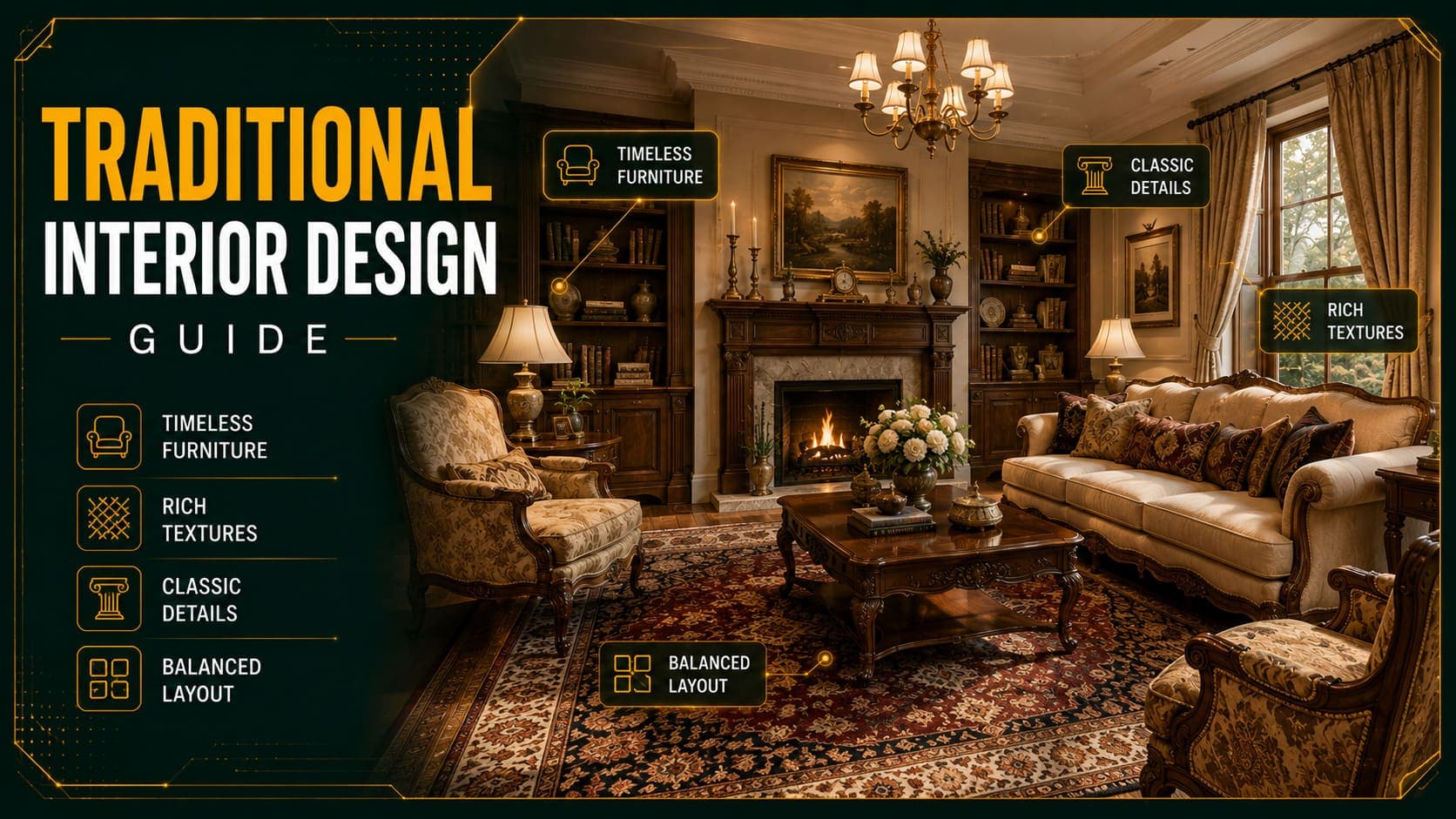
Core Characteristics
Symmetry — Matched pairs, balanced arrangements, furniture placed formally rather than functionally.
Warm, layered colour — Cream, beige, warm neutrals as bases, with deeper accent tones.
Wooden furniture with visible craft — Turned legs, carved detail, panelled fronts. Mid to dark wood tones.
Upholstered comfort — Deep armchairs, rolled arms, tufted or buttoned detail.
Pattern used confidently — Florals, stripes, damask, and classic geometrics, often layered.
Architectural detail celebrated — Cornicing, panelling, picture rails, and fireplaces are features rather than obstacles.
Layered lighting — Table lamps with fabric shades, chandeliers, wall sconces. Rarely a single overhead source.
Textiles as substance — Full curtains, tablecloths, throws. Fabric does more work than in any other style.
Try DecoAI Free
3 free credits. No credit card needed. Stage any room in 30 seconds.
Get 3 Free CreditsThe Traditional Palette
Base Colours
- Warm cream and ivory — the most common wall colour
- Soft beige and sand
- Warm greige — the contemporary-influenced version
- Sage and soft green — traditional but current
Accent Colours
- Deep burgundy and oxblood
- Navy blue
- Forest green
- Warm gold and ochre
- Terracotta
Wood Tones
- Cherry
- Walnut
- Mahogany
- Mid-tone oak
Traditional uses darker woods than any other style except Industrial — but warm rather than blackened.
Materials
- Solid hardwood
- Velvet and chenille
- Wool and silk
- Brass and antique bronze
- Natural stone, particularly marble in fireplaces
Traditional by Room
Living Room
Furniture: Rolled-arm sofa, two matching armchairs, wooden coffee table, side tables in matching wood Palette: Cream walls, upholstery in a warm neutral or muted pattern Textiles: Patterned rug — often a classic oriental or floral, full-length curtains, cushions with piping or trim Lighting: Two table lamps with fabric shades, plus a ceiling fixture Detail: Framed artwork in gold or wood frames, symmetrically placed
The symmetry is what makes it read as Traditional. Two matching lamps, two matching chairs, artwork centred.
Bedroom
Furniture: Wooden bed frame with a headboard, matching bedside tables, a dresser or chest of drawers Palette: Cream or soft green walls, layered bedding in warm neutrals Textiles: Full curtains, a patterned throw, a bedside rug on each side Lighting: Matching table lamps on each side
Dining Room
Furniture: Solid wood table, matching upholstered chairs, a sideboard Palette: Warm neutrals with wood as the dominant tone Lighting: Chandelier centred over the table Detail: Framed artwork, a table runner, candlesticks
Dining rooms are the strongest Traditional application. The formality suits a room designed for occasion.
Kitchen
Cabinets: Shaker-style with panelled doors, in cream, sage, or wood Worktops: Wood, granite, or marble Hardware: Brass or antique bronze knobs and pulls Detail: A dresser or plate rack if space allows
Home Office
Furniture: Wooden desk with drawers, leather or upholstered chair, bookcase Palette: Deeper tones work well here — navy or green walls Lighting: Desk lamp with a brass base and fabric shade
Where Traditional Wins
Family and Suburban Markets
The clearest case. Family buyers looking for a long-term home respond to signals of comfort and permanence more than to design novelty.
Traditional staging communicates "this is a home" more directly than any contemporary style.
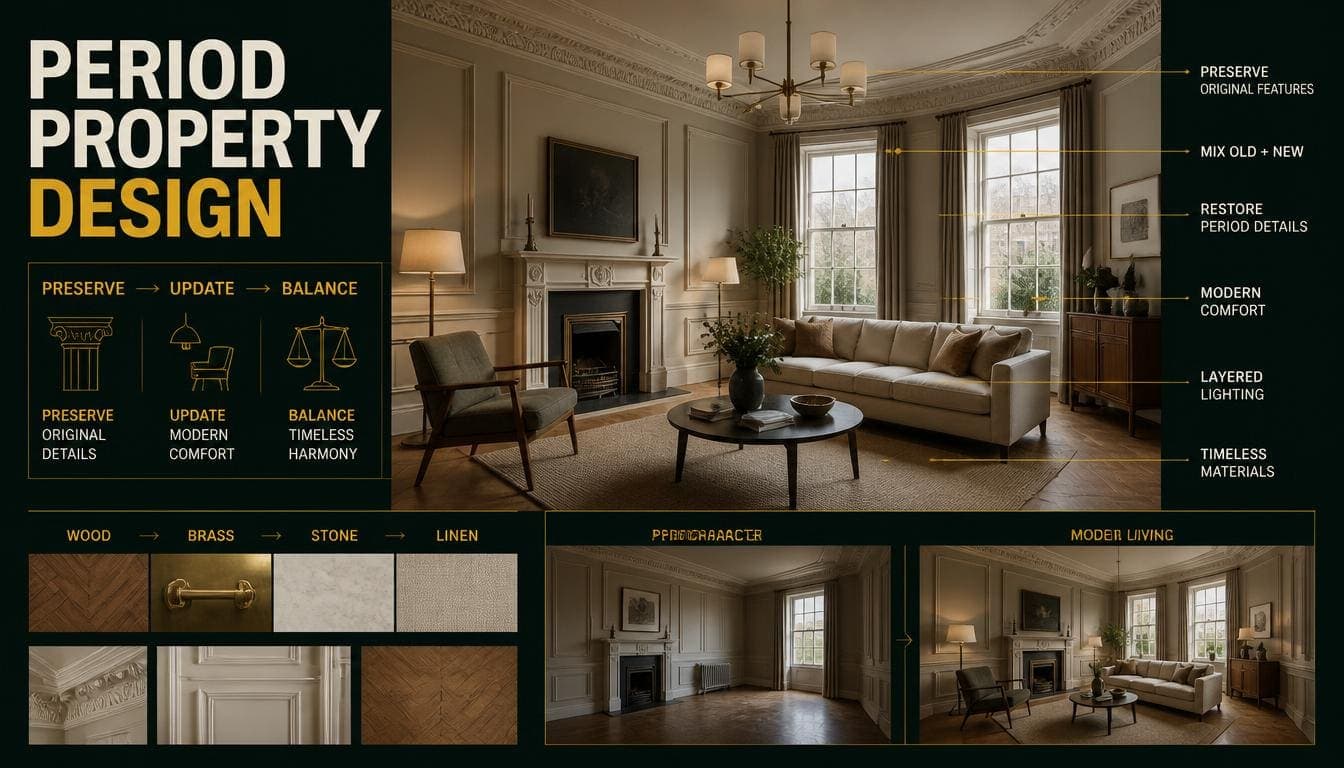
Period Properties
Victorian, Georgian, Edwardian, and Colonial properties have architectural detail — cornicing, panelling, fireplaces, sash windows — that Traditional furnishing supports and contemporary styles fight.
Staging a period property Modern creates a visual conflict most buyers register even if they can't articulate it.
Older Buyer Demographics
Downsizers and buyers over 50 frequently prefer Traditional. In markets skewing that direction, it outperforms.
Rural and Established Markets
Areas where housing stock is older and buyer preferences are settled. Novelty carries less weight than familiarity.
Larger Rooms
Traditional's fuller furnishing suits generous proportions. Where Minimalist would leave a large room looking sparse, Traditional fills it appropriately.
Where Traditional Fails
Urban Apartments
City buyers skew younger and more design-conscious. Traditional in a new-build apartment reads as mismatched with both the architecture and the demographic.
Small Rooms
Traditional furniture is fuller and heavier than contemporary equivalents. Dark wood and layered textiles both make compact rooms look smaller.
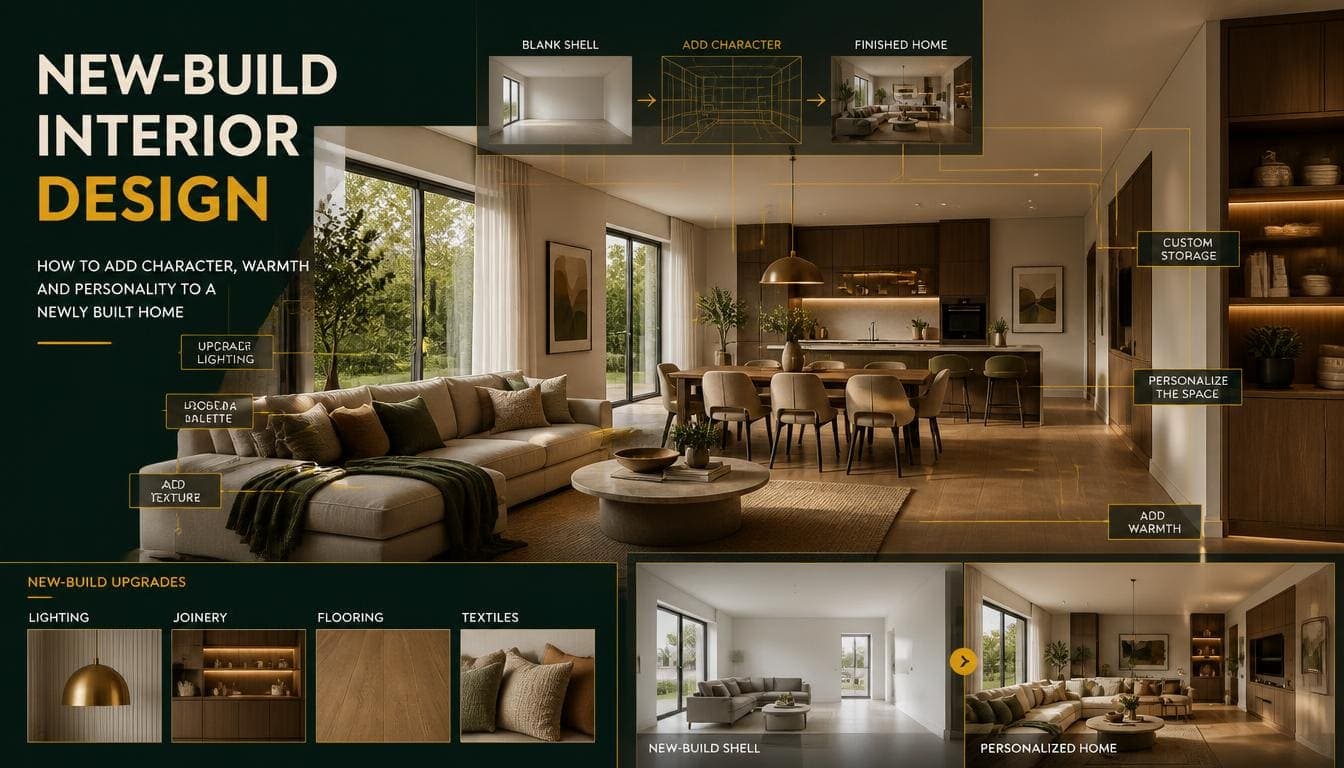
New Builds
Clean-lined contemporary architecture with plain walls and large windows doesn't support Traditional furnishing. There's no architectural detail for it to reference.
Investor and Rental Markets
Neutral broad appeal matters more than character. Contemporary or Modern serves better.
Short-Term Rentals
Airbnb rewards distinctiveness. Traditional reads as safe rather than memorable.
Try DecoAI Free
3 free credits. No credit card needed. Stage any room in 30 seconds.
Get 3 Free CreditsAvoiding the Dated Look
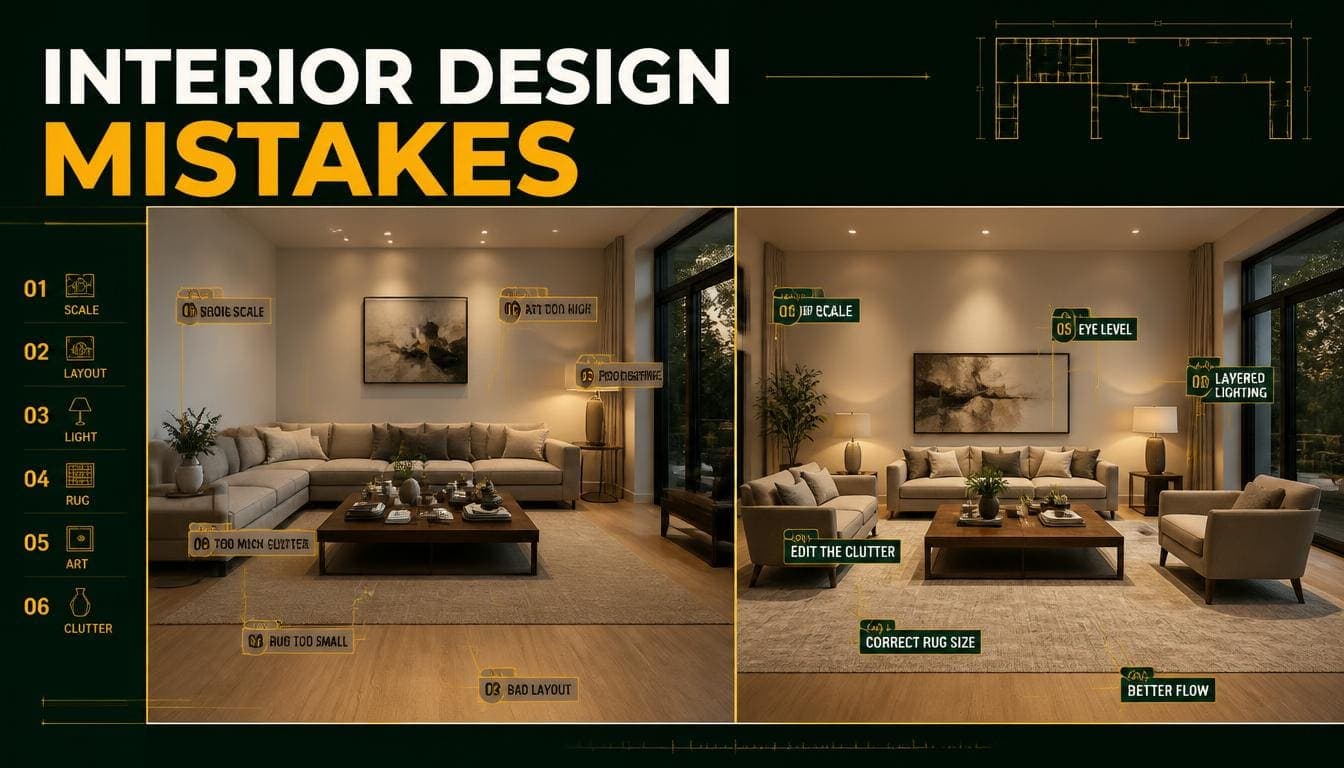
The main risk with Traditional is producing something that looks like a 1990s catalogue rather than a current home.
What Makes Traditional Look Dated
- Heavy matching suites — sofa, loveseat, and chair all in the same fabric
- Swagged and tasselled curtains — elaborate window treatments read as period-specific
- Dark wood everywhere — floor, furniture, and trim all in the same dark tone
- Excessive pattern — floral wallpaper plus floral curtains plus floral upholstery
- Ornate everything — carved detail on every piece rather than as an accent
- Burgundy and hunter green as base colours rather than accents
What Keeps It Current
- Lighter walls — cream or warm greige rather than deep colours
- One patterned element per room — a rug or curtains, not both
- Mixed wood tones — rather than a matched set
- Simpler window treatments — full-length plain curtains rather than swags
- Contemporary art — in traditional frames, providing contrast
- Restraint in ornament — one carved piece, not five
This lighter interpretation is sometimes called Transitional — Traditional forms with contemporary restraint. For most staging, it's the better version.
Traditional vs Transitional
| Factor | Traditional | Transitional |
|---|---|---|
| Pattern | Multiple, layered | One per room |
| Wood tone | Dark, matched | Mixed, mid-tone |
| Walls | Can be deep colours | Light neutrals |
| Ornament | Present throughout | One or two pieces |
| Window treatment | Elaborate | Simple full-length |
| Feel | Formal, period | Comfortable, current |
For staging: Transitional almost always. It carries Traditional's warmth and familiarity without the risk of reading as dated.
Common Traditional Mistakes
1. Over-Committing to Pattern
Floral rug plus floral curtains plus patterned upholstery produces visual noise. One patterned element per room.
2. Matching Everything
A full matched suite reads as a showroom rather than a home. Mix wood tones and upholstery.
3. Dark Walls in Small Rooms
Traditional's deeper palette needs space and light. In compact rooms, use cream walls with traditional furniture instead.
4. Using It in New Builds
Without architectural detail to reference, Traditional furnishing has nothing to anchor to.
5. Elaborate Window Treatments
Swags, tassels, and pelmets are the fastest route to looking dated. Simple full-length curtains achieve the same warmth.
6. Ignoring the Symmetry
Traditional's formality depends on balance. Asymmetric arrangements read as Contemporary regardless of the furniture used.
Frequently Asked Questions
What is traditional interior design?
A style drawing on 18th and 19th century European and American design, characterized by symmetry, warm layered colour, wooden furniture with visible craft, upholstered comfort, confident pattern use, and layered lighting.
Is traditional design outdated?
The full period version can read as dated. A lighter interpretation — sometimes called Transitional — keeps the warmth and familiarity while avoiding the dated signals.
What colours are used in traditional interiors?
Warm cream, beige, and greige as bases. Burgundy, navy, forest green, gold, and terracotta as accents. Mid to dark warm wood tones throughout.
Does traditional work for property staging?
Very well in family markets, suburban areas, period properties, and older buyer demographics. Poorly in urban apartments, new builds, and small rooms.
What's the difference between traditional and transitional?
Transitional uses traditional furniture forms with contemporary restraint — lighter walls, less pattern, mixed wood tones, simpler window treatments. For staging, Transitional is usually the better version.
Should I use traditional in a period property?
Yes. Period architectural detail — cornicing, panelling, fireplaces — is supported by Traditional furnishing and fought by contemporary styles.
Does traditional work in small rooms?
Poorly. Fuller furniture and darker wood tones both make compact spaces look smaller. Scandinavian or Contemporary works better.
What makes traditional staging look dated?
Matched furniture suites, elaborate swagged curtains, dark wood throughout, multiple competing patterns, and deep colours used as bases rather than accents.
Is traditional good for family homes?
It's one of the strongest choices. Family buyers respond to comfort and permanence signals more than to design novelty.
Summary
Traditional gets underrated by designers and chosen consistently by buyers. In the markets where it fits, that gap works in your favour.
Use it for: Family and suburban properties, period buildings with architectural detail, older buyer demographics, larger rooms, and established markets where familiarity beats novelty.
Skip it for: Urban apartments, new builds, small rooms, investor markets, and short-term rentals.
The version to use: Transitional rather than full period Traditional. Lighter walls, one pattern, mixed wood tones, simple curtains. Same warmth, no dated signals.
Test it against a contemporary alternative. DecoAI gives 3 free credits with no card required — enough to compare Traditional and Contemporary in the same room and see which suits your market.