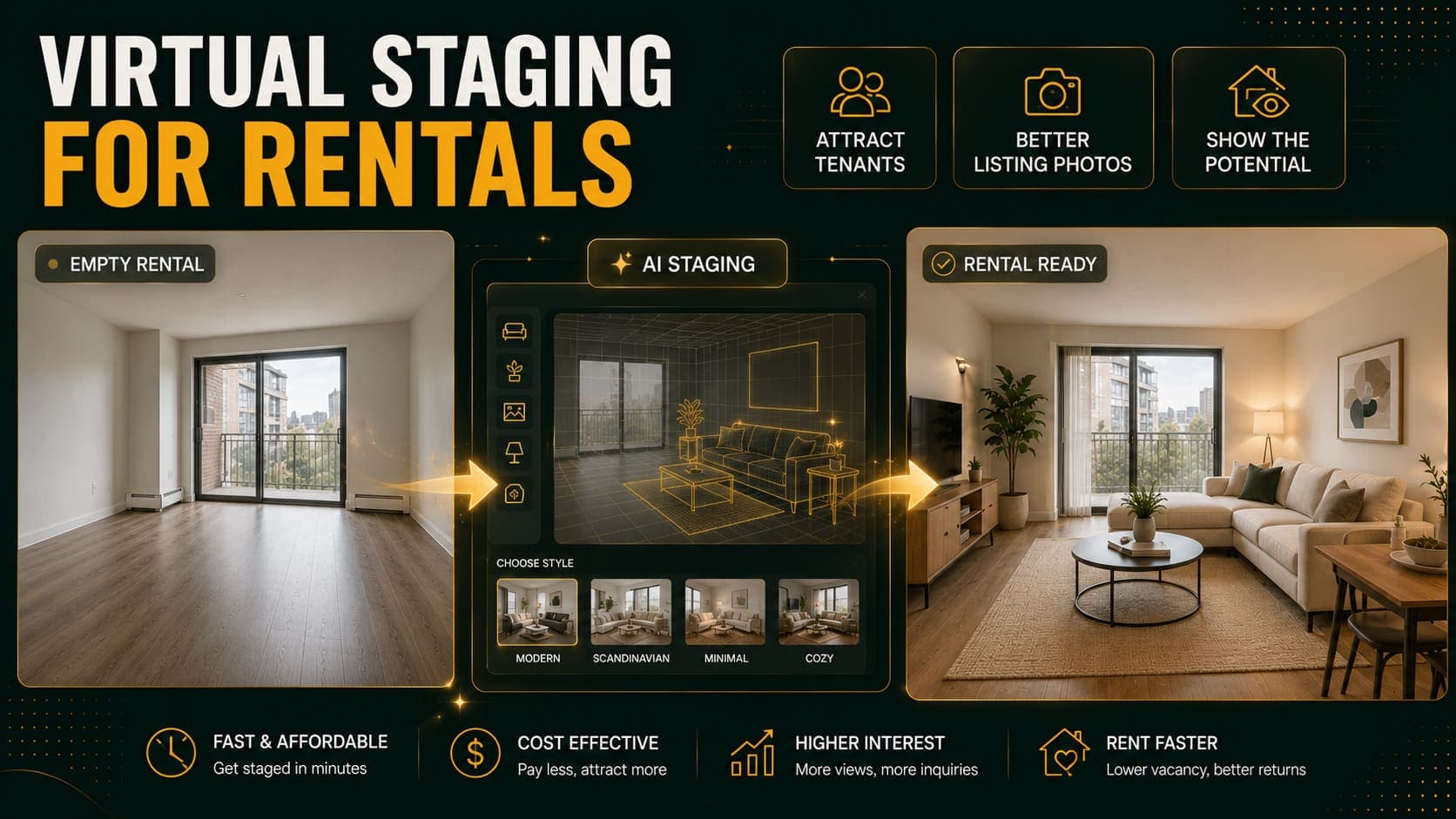
Rental properties have never justified physical staging. Spending $2,300 to furnish a property that generates $1,400 a month makes no sense, so landlords and letting agents simply photographed empty rooms and accepted the result.
At $0.10 per image, that calculation changes completely.
The economics are also sharper than in sales. A void week on a $1,400/month property costs about $320. Reducing a void period by even a few days pays for staging thousands of times over.
The Void Period Problem
What Vacancy Actually Costs
| Monthly rent | Cost per void week | Cost per void month |
|---|---|---|
| $800 | $185 | $800 |
| $1,200 | $277 | $1,200 |
| $1,800 | $415 | $1,800 |
| $2,500 | $577 | $2,500 |
For a landlord with five properties averaging a two-week void between tenancies, that's roughly $1,400–$2,900 in lost rent annually.
Why Empty Rentals Sit Longer
The same reasons empty sale properties do:
Scale is unreadable. Prospective tenants can't tell whether their sofa and bed will fit.
No emotional anchor. Nothing to picture themselves living in.
Poor photographs. Bare rooms produce flat images that don't stop the scroll on rental portals.
More competition per listing. Rental markets typically have more comparable listings than sales markets, which makes standing out harder.
Try DecoAI Free
3 free credits. No credit card needed. Stage any room in 30 seconds.
Get 3 Free CreditsWhere Staging Helps Rentals Most
Unfurnished Properties
The primary case. An unfurnished rental listing shows bare rooms, and prospective tenants have to imagine everything.
Staged photos let them see the space working — while the property remains genuinely unfurnished, which is what many tenants want.
Standard practice: label images as "virtually staged — property let unfurnished" so expectations are clear.
Properties Between Tenancies
The window between one tenant leaving and the next viewing is often the only time the property is empty and clean. Photograph and stage then, and the images serve every future tenancy.
Practical benefit: stage once, use for years. The photos don't expire.
New Build Rentals and Build-to-Rent
Units are identical by design. Stage one unit per type, use the images across every matching unit in the development.
For a 40-unit development with four unit types, that's four staged sets covering all 40 units. Cost: roughly $2.
HMOs and Room Rentals
Individual rooms in shared houses are frequently small and photograph badly empty. Staging shows how a bed, desk, and storage fit — which is exactly what a prospective tenant needs to assess.
Properties Being Repositioned
If you're moving a property from unfurnished to furnished, or targeting a different tenant demographic, staging lets you test how the repositioning reads before buying any furniture.
Where Staging Helps Less
Already-Furnished Rentals
If the property is furnished and the furniture is decent, photograph it as it is. Staging over existing furniture produces unreliable results, and tenants want to see the actual furniture they'll be getting.
Better investment here: decluttering and improved photography.
Very High-Demand Markets
Where properties let within days of listing regardless of presentation, staging's time-saving benefit approaches zero.
That said, better photos may still attract a stronger tenant pool, which has its own value.
Rooms That Photograph Well Empty
Some rooms — particularly bright, well-proportioned ones — look good empty. If the photo already works, staging adds little.
Furnished vs Unfurnished: Using Staging to Decide
One useful application for landlords: testing whether to furnish before spending anything.
The Question
Furnishing a two-bedroom rental costs $3,000–$8,000. It typically supports a rent premium of 10–20% and attracts a different tenant profile — often shorter tenancies.
Whether it's worth it depends on your market.
How Staging Helps
Stage the property furnished and list it both ways, or use staged images to gauge interest in a furnished version before committing.
Cost of testing: roughly $1 Cost of guessing wrong: $3,000–$8,000 in furniture that doesn't return the premium
What to Stage for This Test
Living room — the main furnished-appeal driver Bedroom — bed, wardrobe, bedside tables Kitchen — if there's a dining area
Three images, three styles if you want to test aesthetics too. Under $1 total.
Try DecoAI Free
3 free credits. No credit card needed. Stage any room in 30 seconds.
Get 3 Free CreditsStyle Selection for Rentals
Rental staging follows different rules than sales staging.
Prioritize Broad Appeal
You're not selling a lifestyle — you're demonstrating that a range of people could live here comfortably.
Best: Scandinavian, Modern, Contemporary Avoid: Bohemian, Luxury, Industrial — all narrow the appeal
Emphasize Practicality
Tenants assess storage, workspace, and whether their existing furniture fits.
Show: Wardrobes or storage in bedrooms, a desk or workspace if there's room, adequate seating in living areas Skip: Purely decorative elements that don't communicate function
Keep It Neutral
A rental property serves many tenants over time. Neutral staging ages better than trend-driven staging.
Match the Tenant Demographic
Student rentals: Modern or Minimalist. Show a desk. Show storage. Young professionals: Scandinavian or Modern. Show a workspace. Families: Contemporary. Show a dining area and adequate bedroom space. Corporate lets: Modern or Contemporary. Show a well-equipped, business-appropriate space.
Practical Workflow for Landlords
When to Photograph
Immediately after the previous tenant leaves and the property has been cleaned — before any new furniture goes in, before viewings start.
This is often the only genuinely empty, clean window you'll get.
The Process
1. Clear and clean — 30 minutes. Remove everything, including anything left by the previous tenant.
2. Photograph — 15 minutes. All lights on, curtains open, shoot from corners at chest height, two angles per room.
3. Stage — 20 minutes. Living room, bedrooms, kitchen if there's a dining area. Generate three variations each.
4. Store the files properly — These images serve every future tenancy. Name and archive them clearly.
Total time: About an hour. Total cost: Under $1.
For Letting Agents Managing Multiple Properties
Standardize: One style across your portfolio builds visual consistency and makes your listings recognizable.
Batch: Stage all properties from a week's photography in one session.
Delegate: No design skill required. A property manager or admin can handle it after one training session.
Build a library: Every property staged once serves indefinitely.
Common Mistakes with Rental Staging
1. Not Labelling Furnished Status
The most important thing to get right. If the property lets unfurnished, say so alongside the staged images. Tenants arriving to an empty property they expected furnished will be unhappy.
2. Staging Over Existing Furniture
Unreliable results, and tenants want to see the actual furniture. Photograph furnished rentals as they are.
3. Using Aspirational Styles
Luxury staging on a mid-market rental creates expectations the property won't meet at viewing.
4. Ignoring Storage
Storage is a top consideration for tenants. Staging that shows wardrobes, shelving, and where things go is more useful than staging that shows only seating.
5. Restaging Unnecessarily
Once photographed and staged, the images serve every future tenancy. There's no need to restage unless the property changes.
6. Skipping Small Rooms
Small bedrooms and box rooms photograph worst empty and benefit most from staging. These are often the rooms tenants worry about.
Frequently Asked Questions
Is virtual staging worth it for rental properties?
At $0.10 per image against void costs of $185–$577 per week, yes. Reducing a void period by even a day returns the cost many times over.
Should I stage a rental that lets unfurnished?
Yes, with clear labelling. Staged images help tenants judge scale and layout while the property remains unfurnished as advertised.
How do I label staged rental photos?
"Virtually staged — property let unfurnished" alongside the images. Include unstaged photos too so tenants see the actual space.
Can staging help me decide whether to furnish a rental?
Yes, and it's one of the most useful applications. Testing a furnished presentation costs about $1 versus $3,000–$8,000 to furnish and find out.
What style should I use for rental staging?
Scandinavian, Modern, or Contemporary. Broad appeal matters more than distinctiveness because a rental serves many tenants over time.
Do I need to restage between tenancies?
No. Once the property is staged, the images serve indefinitely unless the property itself changes.
Should letting agents offer staging as a service?
It differentiates against competing agents at essentially no cost. Many landlords don't know it's an option.
Does staging work for HMO room lettings?
Particularly well. Small rooms photograph badly empty, and staging shows how a bed, desk, and storage fit — exactly what prospective tenants assess.
How much does it cost to stage a rental property?
About $0.50 for a five-room property with AI tools, or under $1 including multiple variations.
Summary
Rental properties were priced out of staging entirely when it cost thousands. At under $1 per property, that barrier is gone.
The economics: A void week costs $185–$577. Staging costs $0.50. Even a marginal reduction in void period returns the cost hundreds of times over.
The best applications: Unfurnished properties, the window between tenancies, build-to-rent developments where one staged set covers many units, HMO rooms, and testing whether to furnish before spending thousands.
The rule that matters most: label furnished status clearly. Staged images showing furniture on an unfurnished let need to say so.
Stage one property between tenancies. DecoAI gives 3 free credits with no card required — enough to stage a living room and two bedrooms and see whether it moves your enquiry rate.