Choosing a staging style feels like an aesthetic decision. It isn't — it's a market decision.
The style that makes a property look best to you is often not the style that generates the most inquiries in your specific market at your specific price point. A Bohemian living room that wins design awards will underperform a plain Modern one in a conservative suburban market, and vice versa in a coastal vacation town.
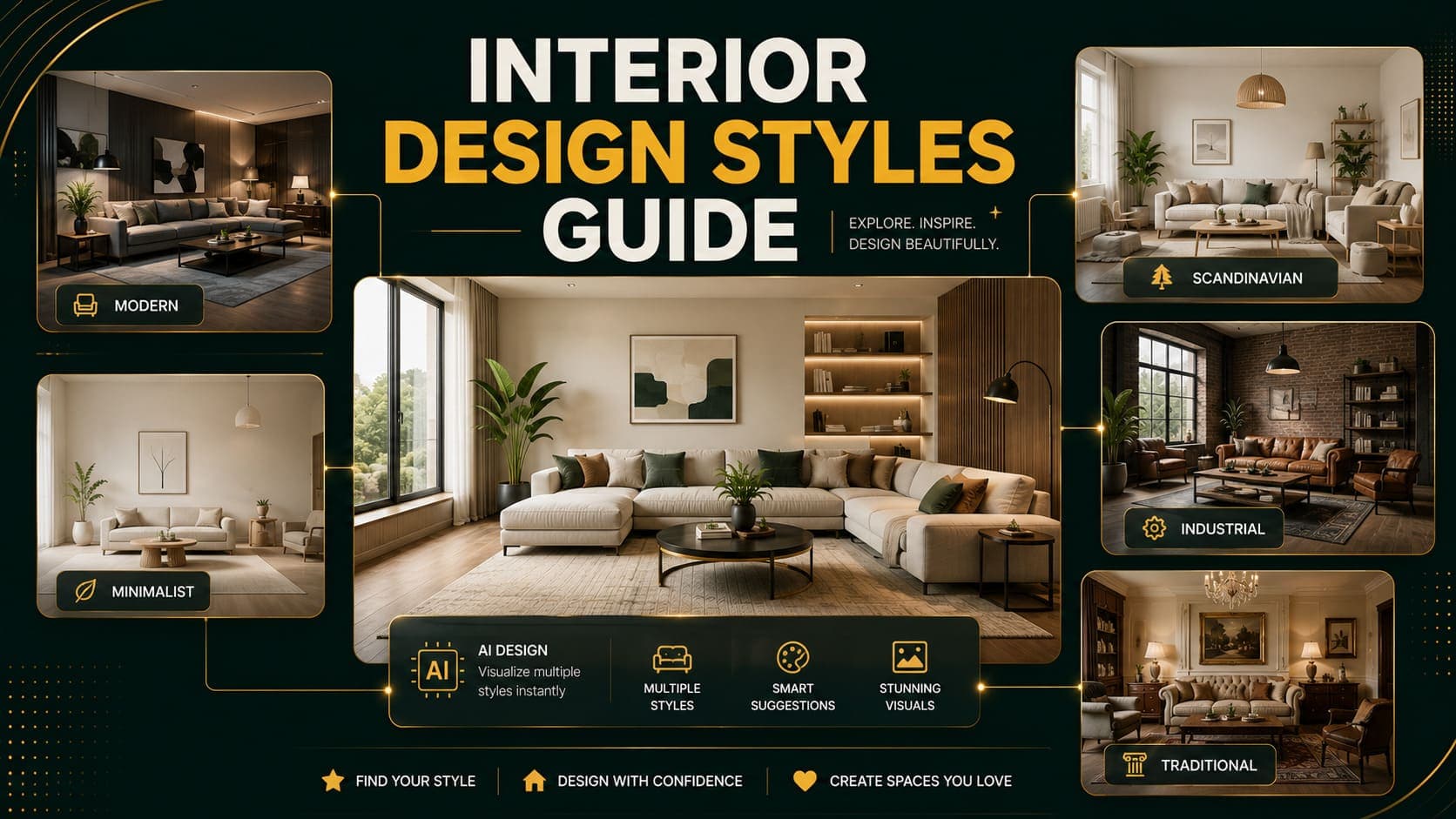
This guide covers the eight styles most staging tools offer, what each signals, which markets they perform in, and how to pick without guessing.
Quick Reference
| Style | Best market | Room feel | Risk level |
|---|---|---|---|
| Modern | Urban, any price | Clean, spacious | Low |
| Scandinavian | Broad, compact spaces | Light, calm | Low |
| Minimalist | Studios, small units | Open, uncluttered | Low |
| Contemporary | Suburban, mid-range | Comfortable, current | Low |
| Traditional | Family, suburban | Warm, familiar | Low |
| Luxury | Premium properties | Rich, impressive | Medium |
| Industrial | Lofts, conversions | Character, edge | Medium |
| Bohemian | Vacation, creative | Distinctive, warm | High |
Risk level here means the chance of alienating a portion of the audience. Low-risk styles rarely turn anyone off but also rarely stand out. High-risk styles generate stronger reactions in both directions.
Try DecoAI Free
3 free credits. No credit card needed. Stage any room in 30 seconds.
Get 3 Free Credits1. Modern
Defining traits: Clean lines, neutral palette, low-profile furniture, minimal ornamentation, functional pieces.
Palette: White, warm grey, charcoal, muted earth tones, occasional black accents.
Typical furniture: Low sofas with clean edges, glass or light wood tables, metal-legged chairs, simple pendant lighting.
Where Modern Works
- Urban apartments and condos
- New builds and recent renovations
- Any property targeting professional buyers
- Markets where you're unsure — this is the safe default
Why It Performs
Modern is the closest thing to a universal style. It photographs cleanly, makes rooms look larger by avoiding visual clutter, and doesn't carry cultural or generational baggage.
If you have one property and no market research, start here.
Where It Falls Short
Modern can read as cold in family homes. Buyers looking for warmth and character sometimes find it sterile. In a suburban family market, Traditional or Contemporary often outperforms it.
2. Scandinavian
Defining traits: Light wood, white walls, soft textiles, natural materials, functional simplicity with warmth.
Palette: White, pale wood, soft grey, sage green, muted blue.
Typical furniture: Light oak or birch, linen upholstery, woven textures, simple wooden legs, plenty of negative space.
Where Scandinavian Works
- Compact apartments — it makes small rooms feel larger than any other style
- Properties with good natural light
- Younger buyer demographics
- Short-term rentals and Airbnb listings
Why It Performs
Scandinavian achieves something rare: it's minimal without being cold. The light wood and soft textiles add warmth that pure Modern lacks, while maintaining the visual openness that makes spaces feel bigger.
It's also extremely photogenic — light-heavy palettes photograph well under most conditions.
Where It Falls Short
In dark rooms with limited natural light, the style's dependence on brightness works against it. Also less effective for large, grand spaces where its restraint reads as under-furnished.
3. Minimalist
Defining traits: Only essential furniture, monochrome or near-monochrome palette, maximum open floor, no decorative objects.
Palette: White, off-white, black, occasional single accent.
Typical furniture: One sofa, one table, one lamp. Nothing else.
Where Minimalist Works
- Studio apartments and micro-units
- Properties where square footage is the selling point
- High-density urban markets
- Buyers explicitly seeking simplicity
Why It Performs
When space is your primary selling point, Minimalist staging shows the most floor. A studio staged Minimalist looks larger than the same studio staged Contemporary, simply because there's less occupying the frame.
Where It Falls Short
Family buyers often read Minimalist as impractical — "where would we put things?" It also struggles in large rooms, where too little furniture makes the space feel unfinished rather than spacious.
4. Contemporary
Defining traits: Current trends, mixed materials, softer edges than Modern, layered but not cluttered.
Palette: Warm grey, blush, navy, terracotta, mixed neutrals with one or two accent tones.
Typical furniture: Curved sofas, mixed-material coffee tables, textured rugs, layered lighting.
Where Contemporary Works
- Suburban family homes
- Mid-range price points
- Properties targeting a broad demographic
- When Modern feels too stark but Traditional feels dated
Why It Performs
Contemporary sits between Modern and Traditional, which makes it the highest-floor style — it rarely produces a bad result in any market. It reads as current without being trend-dependent.
Where It Falls Short
By being between two styles, it lacks strong identity. It rarely produces the memorable image that makes someone save a listing.
5. Traditional
Defining traits: Classic wooden furniture, warm neutrals, symmetrical arrangements, familiar comfort.
Palette: Warm beige, cream, burgundy, forest green, wood tones.
Typical furniture: Upholstered armchairs, wooden dining sets, table lamps, framed artwork, patterned rugs.
Where Traditional Works
- Family homes in suburban markets
- Older properties with period features
- Conservative or established neighborhoods
- Older buyer demographics
Why It Performs
Traditional signals stability and comfort. In markets where buyers are families making a long-term purchase rather than young professionals making a lifestyle choice, this reads correctly.
It also suits properties with existing period features — crown molding, fireplaces, wooden floors — where Modern staging would create a visual conflict.
Where It Falls Short
In urban markets and among younger buyers, Traditional can read as dated. It also photographs heavier than lighter styles, which can make rooms look smaller.
Try DecoAI Free
3 free credits. No credit card needed. Stage any room in 30 seconds.
Get 3 Free Credits6. Luxury
Defining traits: Premium materials, statement pieces, rich fabrics, metallic accents, considered composition.
Palette: Deep navy, emerald, charcoal, ivory, gold or brass accents.
Typical furniture: Velvet upholstery, marble surfaces, sculptural lighting, layered textures, large-scale artwork.
Where Luxury Works
- Premium and high-end properties
- Penthouses and executive apartments
- Properties where the price point supports the expectation
- Markets where buyers expect a certain presentation standard
Why It Performs
At premium price points, presentation is part of the product. A $2M property staged Modern reads as under-marketed; the same property staged Luxury matches buyer expectation.
Where It Falls Short
This is the highest-risk mismatch on the list. Luxury staging on a budget property creates a gap between the listing images and the showing experience that buyers notice immediately — and it damages trust.
Only use Luxury when the property genuinely sits in that tier.
7. Industrial
Defining traits: Exposed materials, metal fixtures, darker tones, raw textures, utilitarian pieces.
Palette: Charcoal, rust, copper, raw wood, black metal.
Typical furniture: Leather sofas, metal shelving, reclaimed wood tables, Edison-bulb lighting, exposed hardware.
Where Industrial Works
- Loft conversions and warehouse spaces
- Properties with exposed brick, beams, or concrete
- Urban creative markets
- Younger buyer demographics in city centers
Why It Performs
When a property already has industrial character, this style amplifies rather than fights it. A converted warehouse staged Traditional creates visual dissonance; staged Industrial, it reads as intentional.
Where It Falls Short
In a standard suburban house with drywall and carpet, Industrial staging looks arbitrary. The style needs architectural support from the property itself.
It also skews dark, which can make rooms look smaller and photograph worse in low-light spaces.
8. Bohemian
Defining traits: Layered patterns, warm earth tones, plants, natural fibers, eclectic combinations.
Palette: Terracotta, rust, mustard, deep teal, warm cream.
Typical furniture: Rattan chairs, patterned rugs, macramé and textile wall pieces, abundant plants, low seating.
Where Bohemian Works
- Vacation rentals and Airbnb properties
- Coastal and leisure markets
- Creative urban neighborhoods
- Properties selling on lifestyle rather than practicality
Why It Performs
Bohemian generates the strongest emotional reaction of any style on this list. On platforms where saves and shares matter — Airbnb, Instagram, Pinterest — it substantially outperforms neutral styles.
Where It Falls Short
Highest risk of alienation. In conservative markets and among buyers seeking a "move-in ready neutral," Bohemian reads as cluttered or too personal.
Use it where distinctiveness is an advantage, not where broad appeal matters most.
How to Choose: A Decision Framework
Step 1: Identify the Buyer
| Buyer type | Best styles |
|---|---|
| Young urban professional | Modern, Scandinavian, Industrial |
| Family with children | Traditional, Contemporary |
| Downsizing retiree | Traditional, Contemporary |
| Investor / landlord | Modern, Scandinavian |
| Airbnb guest | Scandinavian, Bohemian |
| Luxury buyer | Luxury, Modern |
Step 2: Check the Property's Own Character
Some properties have architectural personality that limits your options sensibly.
- Exposed brick or beams → Industrial or Contemporary
- Period features, crown molding → Traditional
- Floor-to-ceiling glass, open plan → Modern or Minimalist
- Small or low-ceilinged → Scandinavian or Minimalist
- Generic modern build → Anything works; pick by market
Step 3: Match the Price Point
| Price band | Appropriate styles |
|---|---|
| Budget | Modern, Scandinavian, Contemporary |
| Mid-range | Contemporary, Traditional, Modern |
| Premium | Luxury, Modern |
| Ultra-premium | Luxury |
Never stage above the property's actual tier. The mismatch is more damaging than plainer staging.
Step 4: Test If Uncertain
At $0.10 per image, generating the same room in three styles costs $0.30. Compare them side by side and pick the one that makes the space look largest and most inviting.
This beats guessing every time.
Style Consistency Across a Property
Pick one style and hold it throughout.
A Modern living room next to a Traditional bedroom reads as disjointed even to viewers who can't articulate why. Consistency creates the impression of a coherent, considered home.
The exception: A home office or study can sometimes shift slightly — Industrial in an otherwise Contemporary home works if the room has different character. But this should be deliberate, not accidental.
Frequently Asked Questions
What is the best interior design style for selling a home?
Modern is the safest default across most markets and price points. Contemporary is the highest-floor choice — it rarely produces a bad result. For specific markets, match the style to the buyer demographic.
Which style makes a room look bigger?
Scandinavian and Minimalist. Both use light palettes and restrained furniture, which maximizes perceived floor space and brightness.
What's the difference between Modern and Contemporary?
Modern refers to a specific mid-20th-century design movement: clean lines, functional forms, neutral palettes. Contemporary means whatever is current — softer edges, mixed materials, and trend-influenced choices. Contemporary is warmer; Modern is sharper.
Should I use the same style in every room?
Yes, in almost all cases. Style consistency across a property creates a coherent impression. Mixing styles reads as disjointed.
What style works best for small apartments?
Scandinavian or Minimalist. Both maximize the sense of space through light colors and restrained furniture.
What style should I avoid?
None universally — but avoid mismatches. Luxury on a budget property, Bohemian in a conservative market, and Industrial in a standard suburban house are the three most common errors.
Which style is best for Airbnb?
Scandinavian for broad appeal and compact spaces. Bohemian for character-driven leisure properties where memorability matters more than neutrality.
How do I know which style works in my market?
Look at what's selling. Browse recently sold listings in your area and note which staging aesthetics appear repeatedly. Alternatively, test two styles for $0.20 and compare.
Does style choice actually affect sale speed?
Style choice affects click-through rate, which affects visibility, which affects inquiries. The effect is real but smaller than the effect of staging versus not staging at all.
Summary
Safe defaults: Modern for urban, Contemporary for suburban Small spaces: Scandinavian or Minimalist Family markets: Traditional or Contemporary Premium properties: Luxury Character properties: Industrial Vacation rentals: Scandinavian or Bohemian
When you're unsure, test. Three styles on one room costs $0.30 and removes the guesswork entirely.
Try it on your property. DecoAI gives 3 free credits with no card required — exactly enough to compare three styles on your main room and see which one the space actually wants.