Industrial design is the most property-dependent style in staging. Applied to a converted warehouse with exposed brick and steel beams, it looks inevitable. Applied to a standard suburban house with plasterboard walls and carpet, it looks like a costume.
Unlike Modern or Scandinavian — which work in almost any architecture — Industrial needs the building to support it.
This guide covers what defines the style, how to tell whether your property can carry it, and what to use instead when it can't.
What Industrial Design Is
The style comes from a specific historical moment: the 1960s and 70s, when artists in New York and London began occupying vacated industrial buildings — factories, warehouses, printworks — as living and working space.
They couldn't afford to renovate, so they didn't. Exposed brick stayed exposed. Steel columns stayed visible. Concrete floors stayed bare.
What began as economic necessity became an aesthetic.
Core Characteristics
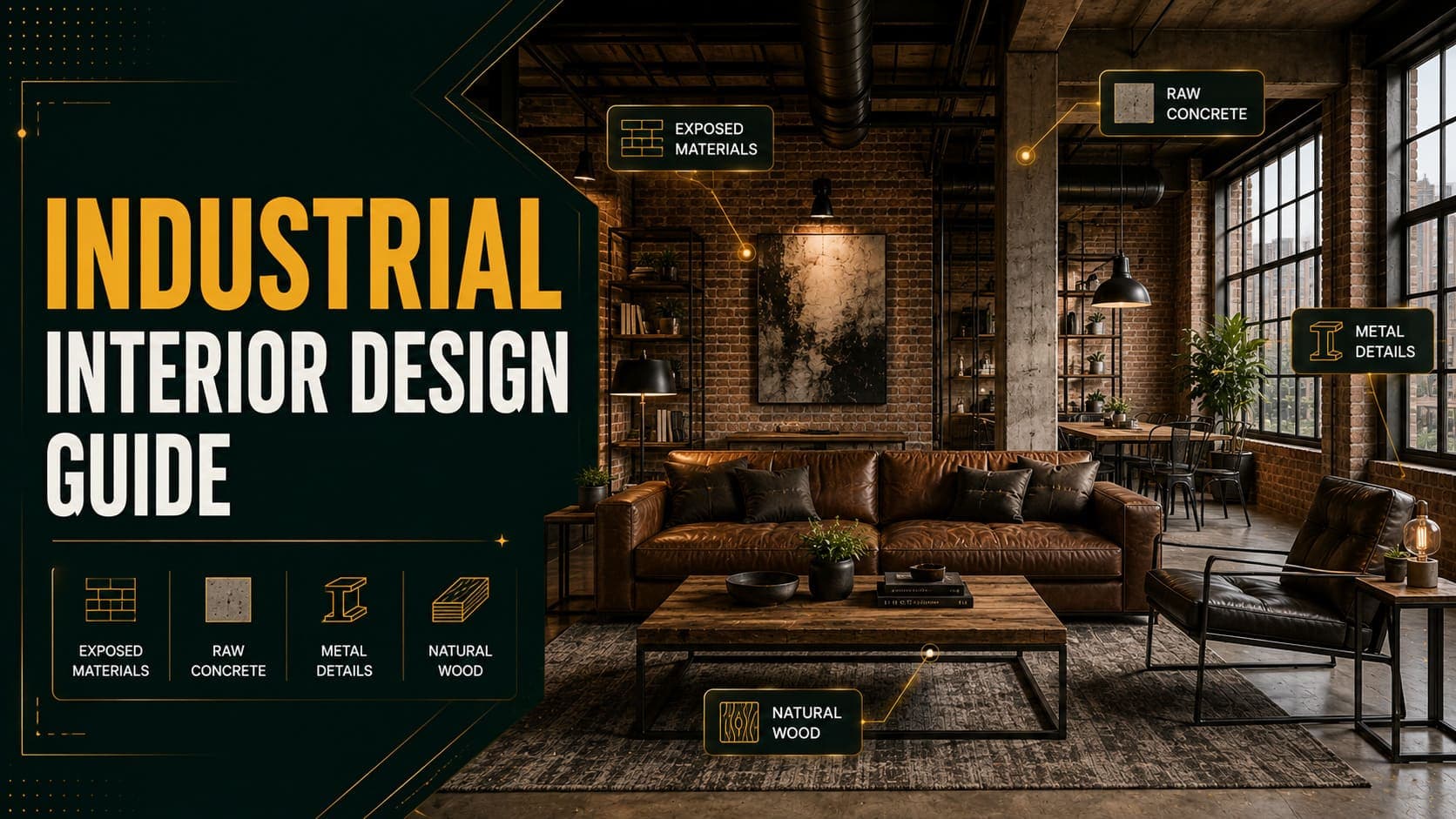
Exposed structure — Brick, concrete, steel beams, ductwork, pipes. Nothing hidden behind finishes.
Raw materials, unfinished — Reclaimed wood with visible wear, blackened steel, weathered leather.
Utilitarian furniture — Pieces that look functional rather than decorative. Metal frames, simple forms, workshop references.
Dark, muted palette — Charcoal, black, rust, aged copper, raw wood tones.
Visible mechanics — Exposed bulbs, factory-style pendant lights, wheeled furniture, industrial hardware.
High ceilings used — Vertical space is central to the style's origins in warehouse buildings.
Open plan — Minimal internal division, reflecting the original factory floor layout.
Try DecoAI Free
3 free credits. No credit card needed. Stage any room in 30 seconds.
Get 3 Free CreditsThe Industrial Palette
Base Colours
- Charcoal and near-black — the dominant tone
- Concrete grey — walls, floors, or both
- Exposed brick red-brown — where the building provides it
- Weathered wood — mid to dark tones with visible grain and wear
Accents
- Rust and burnt orange — echoes oxidized metal
- Aged copper and brass — in lighting and hardware
- Deep olive — occasionally, in upholstery
- Tan leather — the most common warm element
Materials
- Blackened or raw steel
- Reclaimed timber
- Concrete, polished or raw
- Exposed brick
- Aged leather
- Glass with metal framing
What It Avoids
- Pastel colours
- High-gloss finishes
- Ornate detail of any kind
- Matched furniture sets
- Anything that looks new and unworn
Industrial by Room
Living Room
Furniture: Leather sofa in tan or dark brown, metal-framed coffee table with reclaimed wood top, metal shelving unit Palette: Exposed brick or concrete walls, dark floor Lighting: Exposed-bulb floor lamp, factory-style pendant Textiles: One large rug in a muted or geometric pattern — this is the room's main softening element Art: Large-scale, often black and white photography or abstract work
Bedroom
Furniture: Metal-framed bed, reclaimed wood bedside tables, industrial-style clothing rail rather than a wardrobe Palette: Concrete or dark grey walls, white or grey bedding for contrast Lighting: Exposed-bulb wall sconces Note: Bedrooms are the hardest Industrial application. The style's hardness works against restfulness, and most people find the result cold.
Kitchen
Cabinets: Dark, matte, often with visible metal hardware Worktops: Concrete, stainless steel, or dark stone Shelving: Open, metal-bracketed, holding a few items Lighting: Row of factory-style pendants over an island Appliances: Stainless steel, visible rather than integrated
Kitchens are the strongest Industrial application after living areas — stainless steel and utilitarian layout read as authentic here.
Home Office
Furniture: Metal-framed desk with a wood top, industrial task chair, metal shelving Palette: Concrete or dark walls Lighting: Adjustable metal task lamp
This is a natural fit — the workshop reference suits a workspace.
Dining Area
Furniture: Long reclaimed wood table, metal chairs — often mismatched Lighting: Row of pendants or a single large factory-style fixture Detail: Bench seating on one side is characteristic
Does Your Property Support Industrial?
Run through this before choosing the style.
Strong Fit — Use Industrial
- Warehouse or factory conversion
- Exposed brick anywhere in the property
- Visible steel beams or columns
- Concrete floors or ceilings
- Ceiling height over 3 metres
- Large metal-framed windows
- Open-plan layout with minimal internal walls
Two or more of these: Industrial will read as intentional.
Weak Fit — Choose Something Else
- Standard plasterboard walls
- Carpet throughout
- Ceiling height under 2.5 metres
- Small windows with UPVC frames
- Traditional room-by-room layout
- Period features like cornicing or panelling
Two or more of these: Industrial will read as arbitrary. Use Modern or Contemporary instead.
Borderline Properties
Some modern apartments have partial industrial character — exposed concrete ceiling, large windows, open plan, but otherwise conventional finishes.
For these, a lighter Industrial interpretation works: metal-framed furniture and a darker palette without the full commitment to raw materials. Or Contemporary with industrial accents, which is often the safer choice.
Try DecoAI Free
3 free credits. No credit card needed. Stage any room in 30 seconds.
Get 3 Free CreditsWhere Industrial Wins
Loft and Warehouse Conversions
The obvious case. The style exists because of these buildings.
Urban Creative Markets
Buyers in creative industries and city-centre demographics respond well to the aesthetic.
Properties with Strong Architecture
Where the building has genuine character, Industrial amplifies it rather than covering it.
Home Offices and Studios
The workshop reference suits workspaces naturally, even in properties that wouldn't otherwise support the style.
Male-Skewing Buyer Demographics
Industrial polls better with male buyers than most styles. In markets where that's the target demographic, it can be an advantage.
Where Industrial Fails
Standard Residential Properties
Without architectural support, the style reads as applied rather than inherent.
Small Rooms
Dark palettes absorb light and industrial furniture tends toward bulk. Both work against compact spaces.
Low-Ceilinged Rooms
The style relies on vertical space. Under 2.5 metres it feels compressed rather than dramatic.
Family Markets
Hard surfaces, dark tones, and utilitarian furniture read as impractical for families. Contemporary or Traditional performs considerably better.
Rooms with Poor Natural Light
Industrial's dark palette needs light to read as rich rather than gloomy.
Period Properties
Victorian cornicing against exposed ductwork creates an unresolved conflict. Traditional or Contemporary suits period detail better.
Common Industrial Mistakes
1. Applying It Without Architectural Support
The defining error. Industrial needs the building to carry it.
2. Too Dark
Full commitment to charcoal and black in a room with limited light produces something gloomy rather than atmospheric. Balance with lighter elements — a pale rug, white walls on one side, warmer wood.
3. Nothing Soft
All metal, concrete, and leather makes a room feel unwelcoming. A large rug and textile elements are what make the style liveable.
4. Overdoing the Exposed Bulbs
One or two exposed-bulb fixtures reads as intentional. Every light fixture in that style reads as themed.
5. Ignoring Warmth Entirely
Tan leather, reclaimed wood, and rust accents are what prevent Industrial from feeling cold. Removing them leaves something closer to a warehouse than a home.
6. Using It in Bedrooms
The hardest room for this style. Most people find metal-framed beds and concrete walls unrestful. Consider Modern or Contemporary for bedrooms even in an otherwise Industrial property.
Softening Industrial
For properties with partial industrial character, a moderated version works better than full commitment:
Keep: Metal-framed furniture, one or two exposed-bulb fixtures, dark accent wall, reclaimed wood surfaces
Add: A large soft rug, textile cushions, one or two plants, warmer lighting
Drop: Full concrete walls, exposed ductwork, all-black palette
This reads as Contemporary with industrial influence — which is often what buyers actually want.
Frequently Asked Questions
What is industrial interior design?
A style originating from artists converting factories and warehouses into living space in the 1960s and 70s. Characterized by exposed structure — brick, concrete, steel — raw materials, utilitarian furniture, and a dark muted palette.
What colours are used in industrial design?
Charcoal, black, concrete grey, exposed brick tones, and weathered wood as bases. Rust, aged copper, and tan leather as warmer accents.
Does industrial design work in any property?
No. It needs architectural support — exposed brick, steel, concrete, high ceilings, or large industrial windows. In standard residential properties it reads as arbitrary.
Is industrial good for small rooms?
Poorly. Dark palettes absorb light and industrial furniture tends toward bulk. Scandinavian or Modern works better in compact spaces.
What makes industrial design feel warm rather than cold?
Tan leather, reclaimed wood with visible grain, a large soft rug, textile cushions, and warm-toned lighting. Without these it reads as a warehouse rather than a home.
Should I use industrial staging in bedrooms?
Generally no. It's the hardest room for the style — metal frames and hard surfaces work against restfulness. Consider Modern or Contemporary for bedrooms even in an Industrial property.
What's the difference between industrial and modern?
Modern is clean, light, and precise. Industrial is raw, dark, and deliberately unfinished. They share a rejection of ornament but arrive at opposite temperatures.
Can I use industrial in a normal apartment?
A softened version can work — metal-framed furniture, one darker wall, exposed-bulb lighting — without full commitment to raw materials. This reads as Contemporary with industrial influence.
What's a safer alternative to industrial?
Contemporary or Modern. Both work in a wider range of properties and carry less risk of reading as themed.
Summary
Industrial is the most property-dependent style available. It works brilliantly where the architecture supports it and poorly everywhere else.
Use it for: Loft and warehouse conversions, properties with exposed brick, steel, or concrete, high-ceilinged spaces, urban creative markets, and home offices.
Skip it for: Standard residential properties, small rooms, low ceilings, family markets, dim spaces, and period buildings.
The test that matters: look at the property's own materials. If the building already contains brick, steel, or concrete, Industrial amplifies it. If it doesn't, the style is being imposed rather than expressed.
Check whether your property carries it. DecoAI gives 3 free credits with no card required — enough to compare Industrial against Contemporary and see which the architecture actually supports.