The first image in a property listing does more work than the other nineteen combined. It's the thumbnail on search results, the preview in email alerts, and the image shared on social media.
Everything after it matters less, but the order still affects how far buyers scroll and whether they enquire.
This covers which image to lead with, how many to include, and the sequence that holds attention.
The First Image
What It Determines
On most portals, the first image is:
- The search results thumbnail
- The email alert preview
- The social share image
- The map view preview
A buyer scanning fifteen listings sees fifteen thumbnails and clicks perhaps three. That decision happens in under two seconds per listing.
Which Image Should Lead
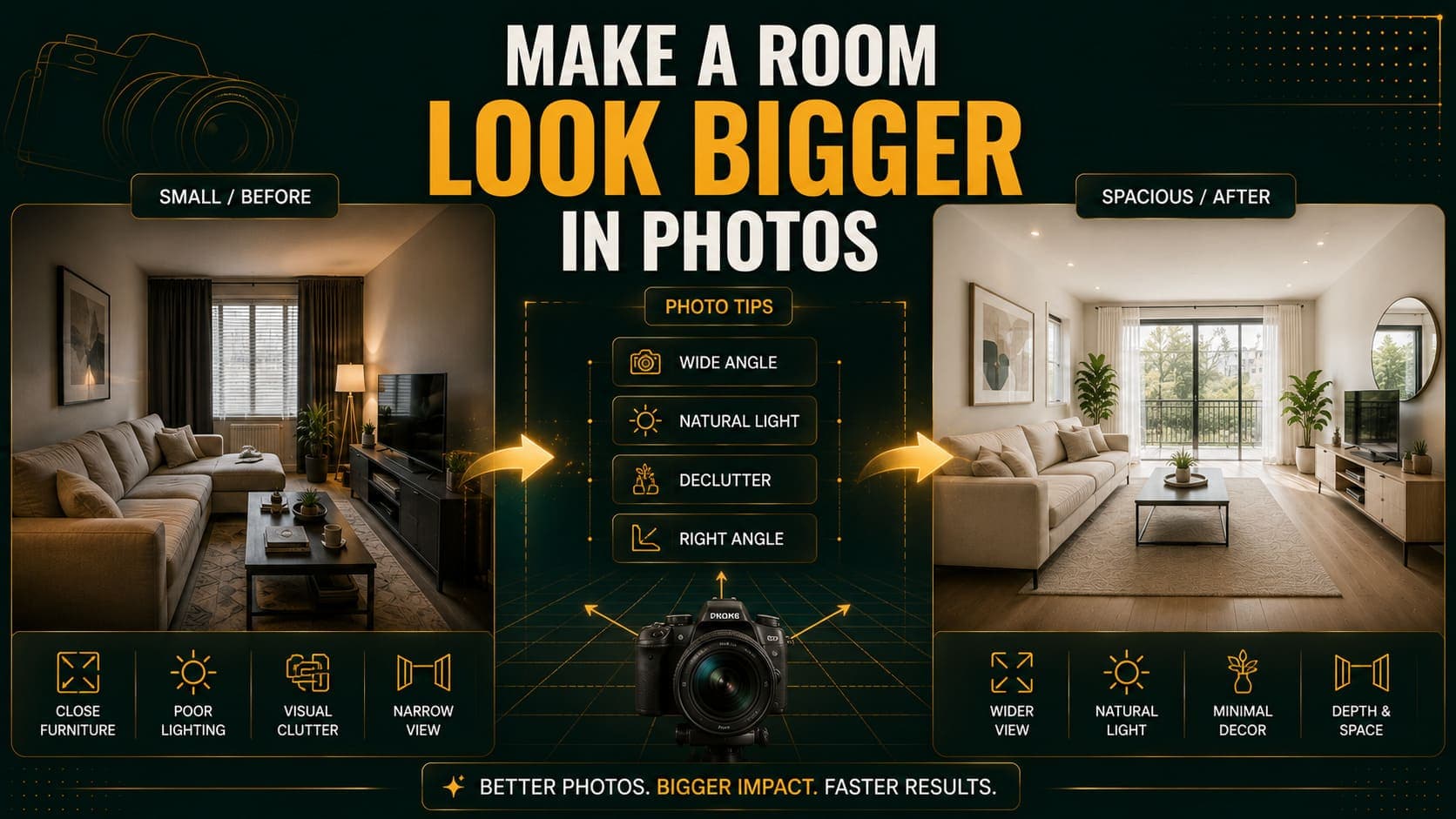
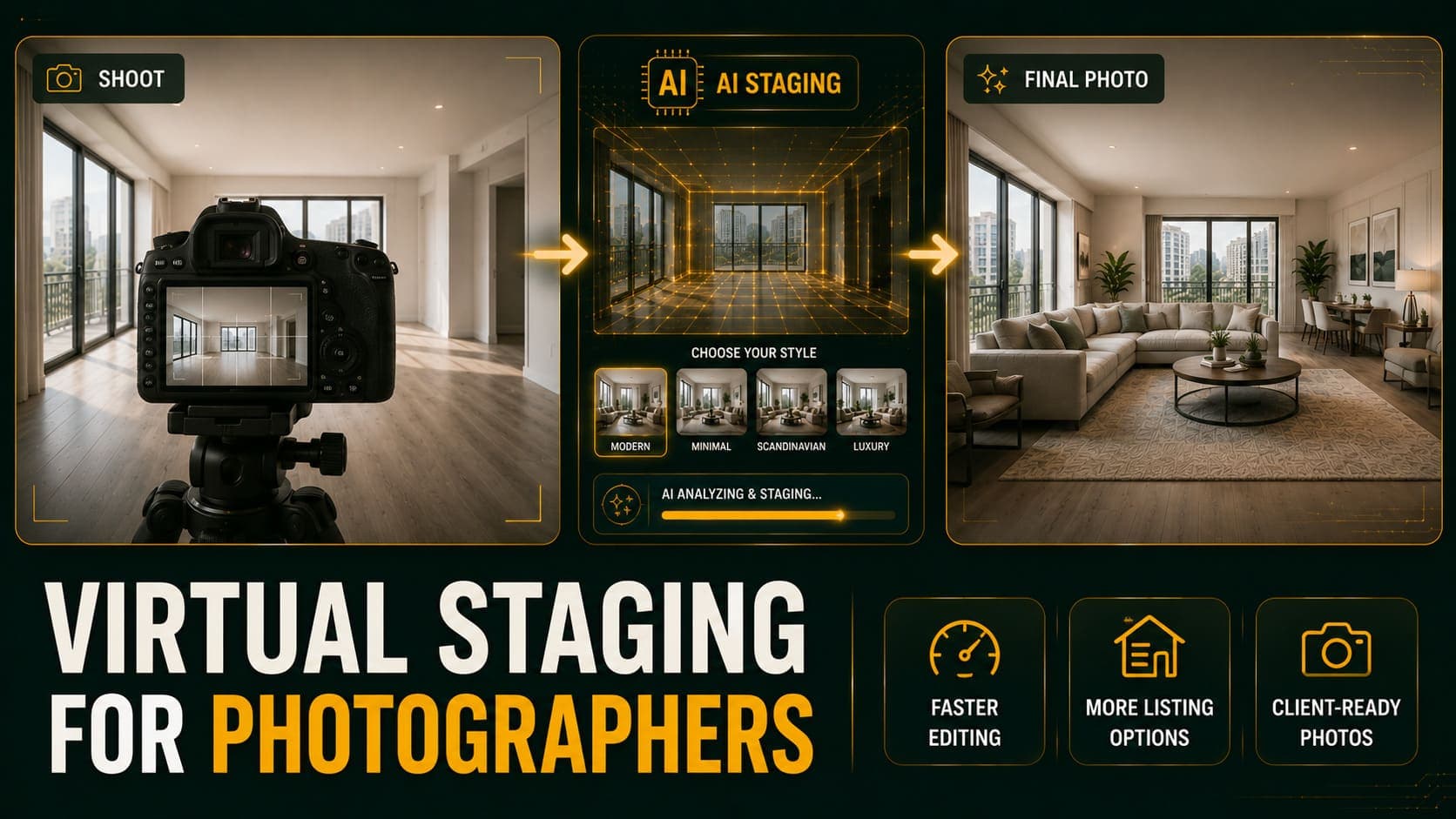
For most properties: the best interior living space. Usually the living room, staged if the property is vacant.
Why interior over exterior: Buyers are choosing a home to live in, not a building to look at. Interior images generate more clicks in most markets and price bands.
When to Lead with the Exterior Instead
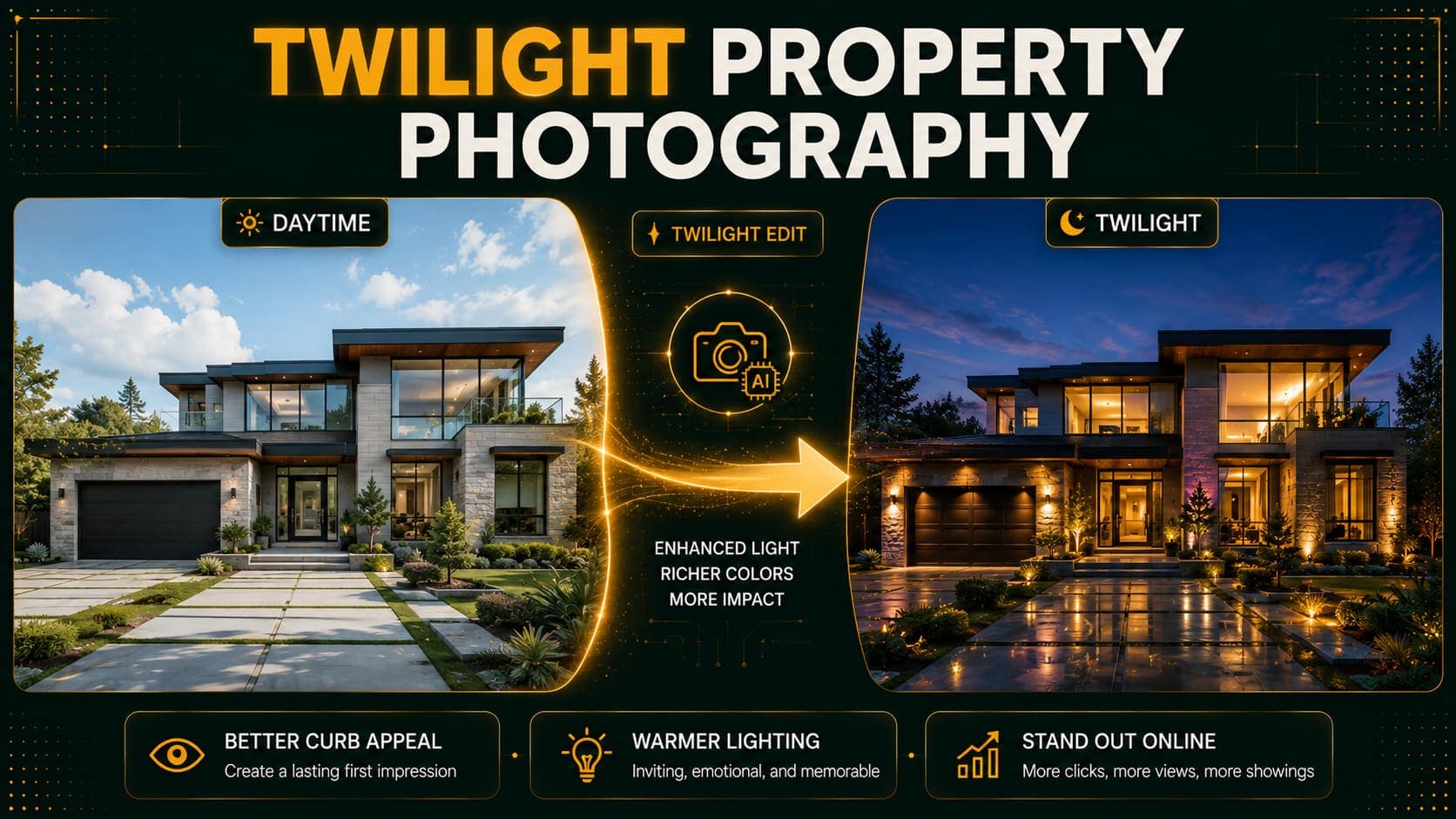
Distinctive architecture — Period properties, unusual buildings, anything visually striking from outside.
Detached houses with kerb appeal — Where the frontage is genuinely attractive and communicates the property type instantly.
Rural and countryside properties — Setting is often the selling point.
When the interior is genuinely poor — If the property needs work, an attractive exterior does more than a dated interior.
When to Lead with a Feature
Some properties have one thing that sells them:
- A garden backing onto woodland
- A roof terrace with a view
- A double-height living space
- An exceptional kitchen
If a single feature is what makes the property competitive, lead with it.
Try DecoAI Free
3 free credits. No credit card needed. Stage any room in 30 seconds.
Get 3 Free CreditsHow Many Photos
The Range
Minimum: 10. Below this, buyers assume you're hiding something.
Optimal: 15–20. Enough to cover every room and answer the obvious questions.
Maximum useful: 25. Beyond this, engagement drops — buyers stop scrolling.
What This Covers
For a typical three-bedroom property:
| Subject | Images |
|---|---|
| Living room | 2 |
| Kitchen | 2 |
| Dining area | 1 |
| Primary bedroom | 2 |
| Bedroom 2 | 1 |
| Bedroom 3 | 1 |
| Bathroom | 1 |
| Second bathroom or cloakroom | 1 |
| Hallway | 1 |
| Garden | 2 |
| Exterior front | 1 |
| Exterior rear | 1 |
| Unstaged versions | 2–3 |
| Total | 18–19 |
What to Skip
- Storage cupboards
- Utility rooms unless they're a selling feature
- Garages unless converted or notably large
- Close-ups of individual fixtures
- Multiple angles of small rooms
The Sequence That Works
The Principle
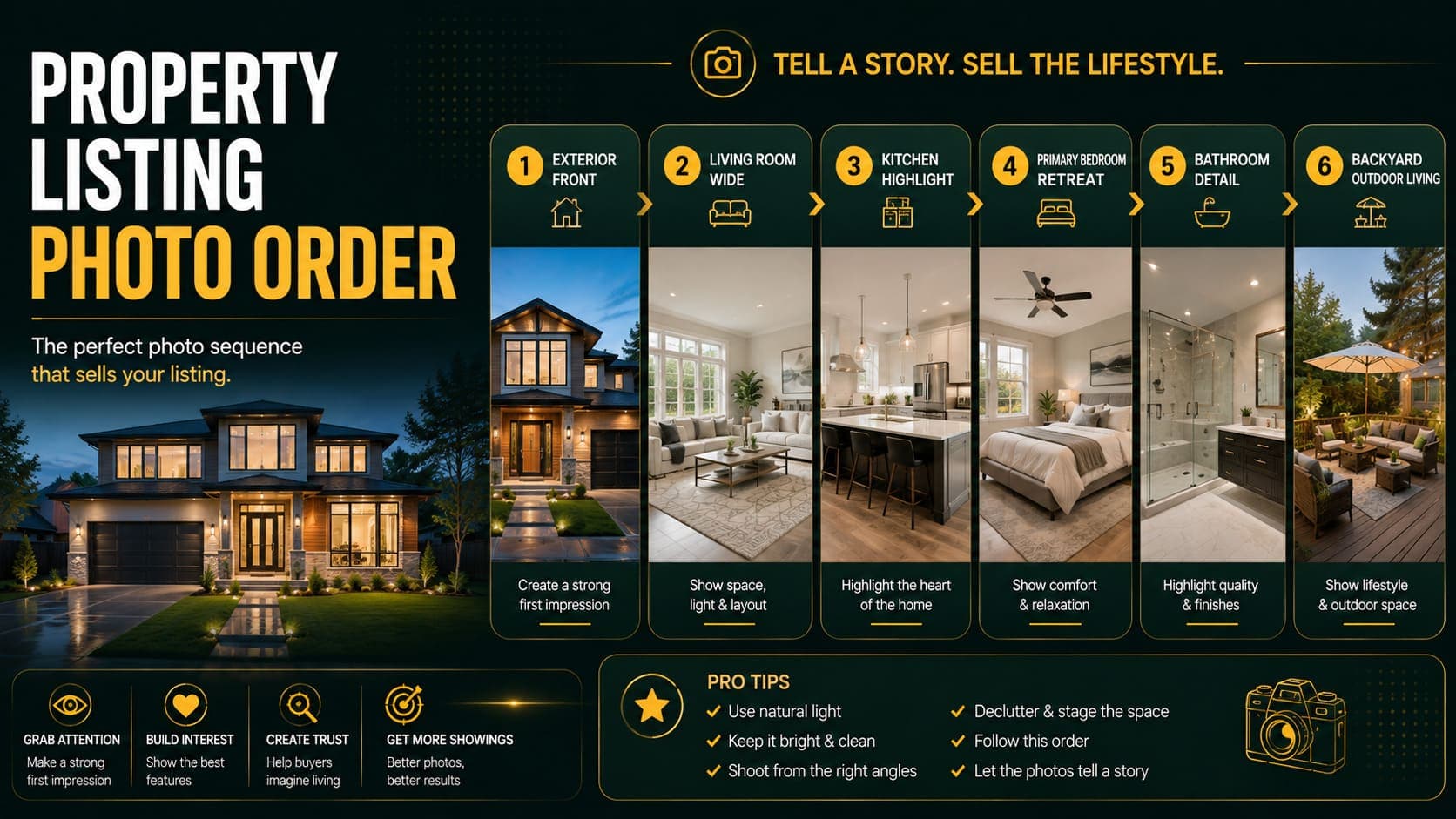
Front-load the strongest images, then move through the property in a logical order, then close with exterior and supporting shots.
Buyers who scroll all the way through are already interested. Buyers who stop after five images need those five to be your best.
The Standard Order
1. Best living space — Your strongest interior image, staged if vacant
2. Kitchen — The second most scrutinized room
3. Primary bedroom — Staged if vacant
4. Second living space or dining area — If the property has one
5. Garden or outdoor space — Frequently a decision factor, often placed too late
6. Living room, second angle — Reinforces the space
7–9. Remaining bedrooms
10. Bathroom
11. Second bathroom or cloakroom
12. Hallway — If it's spacious or has a feature
13–14. Garden, additional angles
15. Exterior front
16. Exterior rear
17–19. Unstaged versions of staged rooms
Why Garden Comes Early
Outdoor space is a decision factor for a large proportion of buyers, and it's routinely buried at position twelve or later.
Moving it to position five means buyers who stop scrolling early still see it.
Why Unstaged Versions Come Last
They serve transparency rather than persuasion. Buyers who scroll that far are already engaged, and seeing the actual empty rooms confirms rather than undermines their interest.
Try DecoAI Free
3 free credits. No credit card needed. Stage any room in 30 seconds.
Get 3 Free CreditsVariations by Property Type
Apartments
Lead with the living space. Include a building exterior shot but place it late — the internal space matters more.
If there's a balcony or terrace, place it at position four or five.
Family Houses
Garden earlier — position three or four. For family buyers, outdoor space frequently ranks above a second reception room.
Include a bedroom count that's easy to follow. Label images clearly if the portal allows it.
Period Properties
Lead with whichever image best shows the period character — often a living room with original features, sometimes the exterior.
Include close-ups of distinctive details, but limit to two or three.
New Builds
Lead with the kitchen if it's a strong specification. New build kitchens are often the best room and a genuine differentiator.
Include specification detail shots — worktops, fixtures — but keep them late.
Properties Needing Work
Lead with whatever is strongest, often the exterior or the garden.
Be straightforward about the interior condition rather than avoiding it. Buyers looking for projects want to assess the scope, and hiding it wastes their time and yours.
Small Apartments and Studios
Fewer photos — 10–14. There's less to show, and padding the gallery with near-duplicate angles looks like you're stretching.
Lead with the widest, brightest image.
Common Sequencing Mistakes
1. Leading with the Exterior by Default
Common habit, rarely optimal. Unless the exterior is genuinely distinctive, an interior image performs better.
2. Burying the Garden
Outdoor space is a decision factor for many buyers and routinely appears at position twelve or later.
3. Bathroom Too Early
Bathrooms rarely sell a property. They belong in the second half of the gallery.
4. Too Many Similar Angles
Three shots of the same living room from marginally different positions reads as padding.
5. Ending on a Weak Image
The last image is the one a buyer sees before deciding whether to enquire. Don't finish on a storage cupboard.
6. Inconsistent Quality
One badly lit image among fifteen good ones stands out. Either fix it or remove it.
7. Mixing Staged and Unstaged Randomly
Group them. Staged images through the main sequence, unstaged versions at the end, clearly labelled.
Practical Rules
Lead with Your Best, Not Your First
The room you photographed first isn't necessarily your strongest image. Review all photos before ordering.
The First Five Carry the Listing
Assume many buyers see only these. They should cover: main living space, kitchen, primary bedroom, outdoor space, and one more strong interior.
Alternate Room Types
Three bedrooms in a row makes the property feel repetitive. Break them up with other rooms or angles where possible.
Match Order to Your Description
If your description leads with the garden, the garden shouldn't be at position fourteen.
Review as a Buyer Would
Scroll the gallery on a phone at normal speed. If you'd stop scrolling, so will they.
Frequently Asked Questions
What should the first photo of a listing be?
For most properties, the best interior living space — usually the living room. Lead with the exterior only if the architecture is distinctive or the interior needs work.
How many photos should a property listing have?
15–20 for a typical property. Minimum 10, maximum useful around 25.
Should the exterior be the first photo?
Usually not. Buyers respond more to interior spaces. Exterior leads work for period properties, rural properties, and homes with genuine kerb appeal.
Where should garden photos go?
Earlier than most listings place them — position four or five. Outdoor space is a decision factor for many buyers.
Should I include unstaged photos?
Yes, at the end of the gallery, clearly labelled. Buyers who scroll that far are engaged, and transparency reinforces rather than undermines interest.
How many photos of each room?
Two for the main living space and primary bedroom, one for other rooms. More than two of any room reads as padding.
Does photo order actually matter?
The first image matters enormously — it's the thumbnail. Order after that has a smaller but real effect on how far buyers scroll.
What's the worst photo to lead with?
A bathroom, a hallway, or a badly lit room. Also any image where the property looks smaller than it is.
Should the last photo be something specific?
End on a strong image — a garden shot or an attractive exterior. It's the last thing a buyer sees before deciding whether to enquire.
Summary
First image: Best interior living space for most properties. Exterior only if distinctive.
Count: 15–20 for a typical property.
First five: Main living space, kitchen, primary bedroom, outdoor space, one more strong interior. Assume many buyers see only these.
Garden: Earlier than most listings place it.
Unstaged versions: At the end, clearly labelled.
The test: scroll your own gallery on a phone at normal speed. If you'd stop, so will buyers.
Make your first image count. DecoAI gives 3 free credits with no card required — enough to stage your lead image in three styles and pick the strongest.