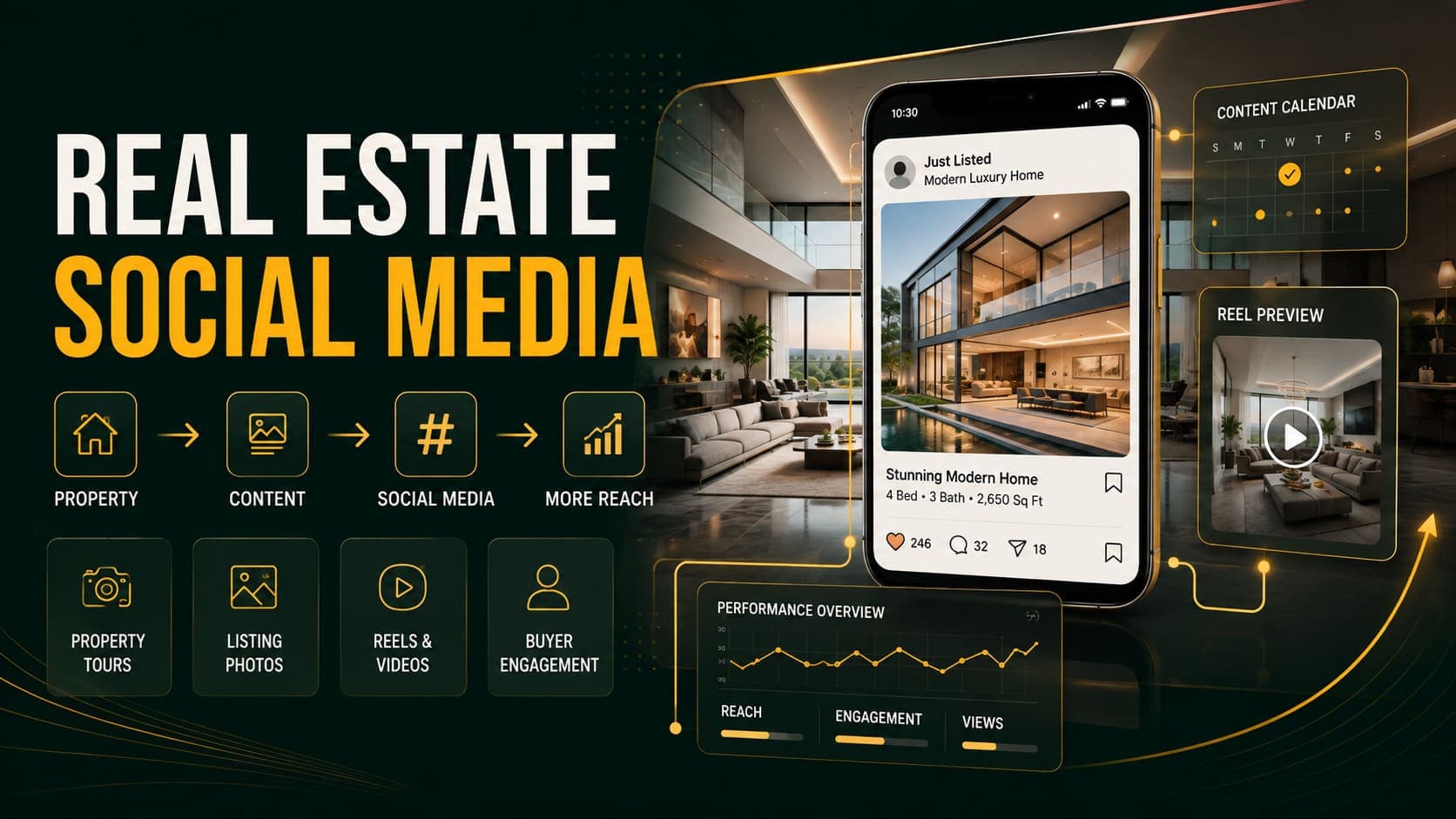
Most real estate social media doesn't work, and the reason is consistent: agents post listings to an audience that isn't currently buying.
The people following a local agent are mostly other agents, past clients, and people who might move in three years. Posting a new listing to that audience generates likes from other agents and very little else.
What does work looks different — and it's less about volume than most social media advice suggests.
The Fundamental Problem
Your Audience Isn't in Market
At any given time, roughly 5% of the population is actively buying or selling. The other 95% follows you for other reasons or doesn't engage at all.
Posting listings serves the 5%. Everything else you post determines whether the other 95% remembers you when they enter the market.
Social Media Is a Memory Play, Not a Lead Gen Play
For most agents, social media doesn't generate immediate enquiries. It maintains presence so that when someone does decide to sell, you're who they think of.
That changes what's worth posting. Content that makes people remember you beats content that describes a property they can't buy.
Portals Handle Listing Distribution
Buyers actively searching are on portals, not scrolling Instagram hoping to find a property. Duplicating portal content on social adds little.
Try DecoAI Free
3 free credits. No credit card needed. Stage any room in 30 seconds.
Get 3 Free CreditsWhat Actually Performs
Before-and-After Content
The strongest performing format in property social media, consistently.
Empty room to staged room. Dated kitchen to renovated kitchen. Overgrown garden to cleared garden.
Why it works: Visual transformation is inherently engaging, it's shareable, and it demonstrates capability without being a sales pitch.
Practical note: virtual staging makes this format available for any vacant listing at negligible cost. Photograph the empty room, stage it, post both.
Local Area Content
Content about the area rather than about properties.
- New restaurant or café openings
- Local development news
- School catchment changes
- Transport improvements
- Neighbourhood guides
Why it works: It's useful to people who live locally regardless of whether they're moving. It also positions you as knowledgeable about the area, which is what sellers actually select agents on.
Market Data with Interpretation
Not raw statistics — statistics with a plain-language explanation of what they mean locally.
"Average time on market in [area] went from 34 days to 51 days this quarter. In practice that means pricing accurately matters more than it did six months ago."
Why it works: People considering a move want context they can't get from a portal.
Process Explanation
Short, practical explanations of things people find confusing.
- What happens between offer and completion
- What a survey actually covers
- How chains work and why they collapse
- What agents actually do for their fee
Why it works: It answers questions people are too embarrassed to ask, and it builds trust before they need you.
Genuine Behind-the-Scenes
Not staged "day in the life" content — actual moments. A difficult negotiation resolved, an unusual property, a problem solved.
Why it works: Specificity is memorable. Generic content isn't.
What Doesn't Perform
Listing Posts
The most-posted, least-effective format for most agents.
Why: Your audience isn't buying, and the people who are buying are on portals.
The exception: genuinely exceptional or unusual properties. A striking property performs on social regardless of whether the audience is buying.
Just Sold / Just Listed Graphics
Templated announcement graphics generate almost no engagement outside your own industry.
Motivational and Generic Content
"Home is where the heart is" over a stock photo. Real estate quote graphics. Generic inspiration.
These fill a posting schedule without achieving anything.
AI-Generated Filler
Recognizable and increasingly ignored. AI-written property content has a distinct sameness that audiences have learned to scroll past.
Overposting
Posting daily to maintain an algorithm rarely works and frequently reduces per-post engagement. Three good posts a week outperform seven mediocre ones.
Try DecoAI Free
3 free credits. No credit card needed. Stage any room in 30 seconds.
Get 3 Free CreditsPlatform by Platform
Best for: Visual transformation content, local area, property tours
Format: Before-and-after carousels perform well. Reels for property walkthroughs.
Frequency: 3–4 posts weekly, stories more often
What doesn't work: Static listing photos with a caption listing the specification
Best for: Local community engagement, longer-form area content, market commentary
Format: Native posts with images. Local group participation often outperforms your own page.
Frequency: 2–3 posts weekly
Note: Facebook groups for local areas are frequently more valuable than a business page. Participate genuinely rather than promoting.
Best for: Commercial property, developer relationships, referral networks
Format: Market analysis, transaction commentary, industry observations
Frequency: 1–2 posts weekly
Note: Residential agents often overinvest here. Your buyers aren't on LinkedIn for property.
TikTok
Best for: Property tours of unusual homes, market explanation, quick tips
Format: Short-form video only
Frequency: High volume or don't bother — the platform rewards consistency more than others
Honest note: TikTok works for agents who genuinely enjoy the format. It doesn't work as an obligation.
YouTube
Best for: Full property tours, area guides, detailed process explanation
Format: Longer video, 3–15 minutes
Frequency: Weekly or fortnightly
Note: Highest production effort, longest content lifespan. A good area guide generates views for years.
A Realistic Posting Approach
For an Agent Without a Content Team
Three posts a week:
- One transformation — before-and-after of a staged room, a renovation, or a garden clearance
- One local — something happening in the area
- One useful — a process explanation or market observation
Time: Roughly two hours a week including creation.
That's sustainable and outperforms daily posting of low-value content.
Content Sources You Already Have
Every vacant listing produces a before-and-after if you stage the photos.
Every viewing produces a local observation.
Every transaction produces a process story worth explaining.
Every market report produces an interpretation post.
You don't need to invent content. You need to notice what you're already doing.
Using Staging for Social Content
Virtual staging produces the highest-performing social format almost for free.
The Format
Post 1: Empty room photograph Post 2 (or carousel slide 2): Staged version
Or as a single before-and-after image.
Why This Works
- Visual transformation is inherently engaging
- It demonstrates what you do for sellers
- It's genuinely interesting to people who aren't buying
- It costs $0.10
Practical Variations
Multiple styles: Same room in three styles, asking which people prefer. This generates comments, which most property content doesn't.
Style poll: Post two staged versions and ask which suits the property. Engagement without asking for anything.
Renovation potential: For dated properties, show the current state and a renovation visualization.
Label clearly. Social content showing staged images should say so, same as listings.
Common Mistakes
1. Posting Only Listings
Your audience isn't buying. Listings serve 5% of followers.
2. Overposting Low-Value Content
Three good posts beat seven filler ones.
3. Templated Announcement Graphics
"Just Listed" and "Just Sold" graphics generate almost no engagement outside the industry.
4. Ignoring Local Content
Area knowledge is what sellers actually select agents on, and it's the content most agents skip.
5. Using AI to Write Everything
Recognizable and increasingly ignored.
6. Being on Every Platform
Two platforms done properly beat five done badly.
7. Expecting Immediate Leads
Social media is a memory play. Expecting direct enquiries from every post leads to abandoning it too early.
Frequently Asked Questions
Does social media generate real estate leads?
Rarely directly. It maintains presence so people think of you when they decide to move. Expecting immediate enquiries usually leads to disappointment.
How often should agents post?
Three times a week is sustainable and effective. Daily posting of low-value content typically reduces per-post engagement.
What performs best on real estate social media?
Before-and-after transformations, local area content, and plain-language market interpretation. Listing posts perform worst.
Should I post every listing?
No. Post exceptional or unusual properties. Routine listings belong on portals, where buyers actually search.
Which platform should agents focus on?
Instagram and Facebook for residential, LinkedIn for commercial. Pick two and do them properly rather than spreading across five.
Does AI-generated content work for social media?
Poorly. It has a recognizable sameness that audiences increasingly scroll past. Use it for drafts, not final content.
What's the easiest high-performing content to produce?
Before-and-after staging images. Photograph an empty room, stage it, post both. Costs about 10 cents and consistently outperforms listing posts.
Should I show staged photos on social media?
Yes, labelled as staged. Transformation content performs well and demonstrates value to potential sellers.
How long before social media produces results?
Six to twelve months of consistent posting before presence translates into recognition. It's a slow channel.
Summary
The core insight: your audience isn't buying. Social media maintains presence for when they eventually are.
What performs: Before-and-after transformations, local area content, market interpretation, process explanation.
What doesn't: Listing posts, announcement graphics, generic inspiration, AI filler, and overposting.
A sustainable approach: three posts weekly — one transformation, one local, one useful. Roughly two hours a week.
The easiest win: stage your vacant listings and post the before-and-after. It's the highest-performing property social format and costs about 10 cents.
Generate content while you work. DecoAI gives 3 free credits with no card required — enough for three before-and-after posts from listings you're already handling.